Desserts
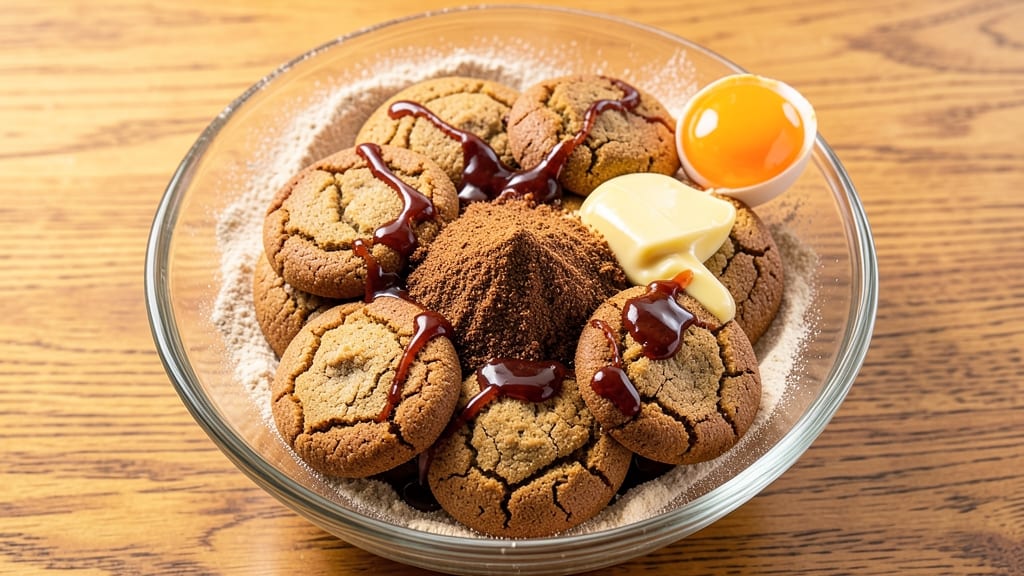
This German gingerbread cookies recipe delivers the molten spice and satisfying crunch that makes them a holiday staple—without requiring advanced baking skills. The secret lies in precise spice ratios and a slow bake that creates that signature tender-yet-crisp texture.
I've perfected this version after years of testing, ensuring every batch turns out with the perfect balance of warmth and chew.
What sets these apart is the authentic German flavor profile—molasses, cinnamon, and cloves work together in harmony while brown sugar adds depth. The dough requires just 15 minutes of prep, then rests while you prepare your baking sheets.
This resting period is crucial for developing flavor and preventing overly dense cookies.
By the time they emerge from the oven, you'll have golden-brown cookies with a crackly top and a soft, spiced center that practically melts in your mouth.
The aroma alone will transform your kitchen into a cozy German bakery. These cookies stay fresh for days, making them perfect for gifting or enjoying with tea.
Pair them with vanilla ice cream or dust with powdered sugar for an extra touch of elegance. The technique is simple, but the results are restaurant-quality—exactly what you'd find in a traditional German Christmas market. Let's get started on creating these timeless treats.
Ingredients for german gingerbread cookies
The perfect blend of warm spices and tender dough—just 13 ingredients for classic German holiday magic.
| Ingredient | Amount | Notes |
|---|---|---|
| All-Purpose Flour 🌾 | 3 ½ cups | Sifted for light texture |
| Unsalted Butter 🧈 | 1 cup | Cold, cubed for dough |
| Dark Brown Sugar 🍚 | 1 cup | Packed, for deep flavor |
| Molasses 🍯 | ½ cup | Pure, unsulphured preferred |
| Large Eggs 🥚 | 2 whole | Room temperature |
| Ground Cinnamon 🌿 | 2 tsp | Freshly ground preferred |
| Ground Ginger 🌶️ | 1 ½ tsp | Freshly ground for warmth |
| Ground Cloves 🌿 | ½ tsp | Freshly ground for depth |
| Ground Nutmeg 🌿 | ½ tsp | Freshly grated for aroma |
| Salt 🧂 | ½ tsp | Fine sea salt |
| Powdered Sugar 🍚 | ½ cup | For dusting finished cookies |
| Vanilla Extract 🍯 | 1 tsp | Pure vanilla preferred |
| Baking Soda 🧪 | 1 tsp | For lift and tenderness |
The molasses is non-negotiable here—pure, unsulphured makes all the difference. Trader Joe's and Whole Foods carry great options, but check the label. The spices? Freshly ground is ideal, but if you're using pre-ground, Penzeys or bulk bins at natural stores have the best quality. I always toast my whole spices in a dry pan for 30 seconds before grinding—wakes up the flavor. The butter should be cold when you mix it in; let it sit at room temp for 30 minutes first, then pop it in the freezer for 10 minutes before cubing.
No molasses? Dark corn syrup works in a pinch, though it lacks that authentic depth. Short on brown sugar? Substitute white sugar plus 1 tbsp extra molasses for moisture. The baking soda is crucial—don't swap for baking powder. If you can't find pure vanilla extract, imitation plus a pinch of vanilla bean powder gets you closer. For the powdered sugar dusting, I use Domino brand—it's fine and clumps less. The dough will be thick, almost like cookie dough, but that's perfect for the resting period. If it feels too sticky, add 1 tbsp more flour.
This dough needs at least 2 hours of resting—cover it with plastic wrap and refrigerate. The longer it rests, the better the flavor. Cookies keep in an airtight container for 5 days at room temp, or 2 weeks in the fridge. For gifting, freeze portions on parchment-lined sheets for up to 3 months. Reheat in a 300°F oven for 5 minutes to restore crispness. The aroma alone will make your kitchen smell like a German Christmas market—worth every minute of waiting.
Why You'll Love This Recipe
- No-Fuss Dough: I swear, this dough comes together in one bowl—no stand mixer, no fuss. Just creaming butter and sugar until it’s light, then folding in the molasses and flour. My kids think it’s magic.
- Molasses Magic: That deep, caramelized kick from molasses? It’s the star. The cookies have this perfect balance of sweetness and warmth, with just a hint of spice from the cinnamon and cloves. Honestly, I could eat a dozen straight from the pan.
- Holiday or Snack: These work for everything—wrap them in twine for Christmas gifts, pack them in lunchboxes for school, or serve them with coffee when the in-laws visit. (Yes, even on a Tuesday night.)
- Budget-Friendly Staples: You’re using pantry basics—flour, butter, sugar—so it’s cheap to make in bulk. I bake a whole batch, freeze half, and still have cookies for weeks. My wallet and my taste buds thank me.
Step-by-step instructions for German gingerbread cookies
Here's how to create these rich, spiced cookies with a perfect balance of chewy centers and crisp edges.
Mix the Wet Ingredients
In a large mixing bowl, combine the 1 cup unsalted butter and 1 cup dark brown sugar. I like to use a hand mixer on medium speed for about 2 minutes until the mixture becomes light and fluffy. This step incorporates air, which helps create that tender texture we're after.
Next, add the 0.5 cup molasses and 1 tsp vanilla extract. Mix on low speed until fully combined. The molasses gives these cookies their signature deep flavor, so don't skip this step. You'll notice the mixture will darken slightly as the molasses blends in completely.
Finally, add the 2 whole large eggs, one at a time, mixing just until each is incorporated. The eggs help bind everything together and add moisture. I always use room temperature eggs—they mix more smoothly and create a better texture in baked goods.
Combine Dry Ingredients
In a separate bowl, whisk together the 3.5 cups all-purpose flour, 2 tsp ground cinnamon, 1.5 tsp ground ginger, 0.5 tsp ground cloves, 0.5 tsp ground nutmeg, 0.5 tsp salt, and 1 tsp baking soda. This is where all the warm spice magic happens!
I recommend sifting the flour first to prevent lumps in your dough. The baking soda will give your cookies that nice lift, while the spices create that authentic German gingerbread flavor profile. Mix these dry ingredients thoroughly so every spoonful has an even distribution of spices.
With the mixer on low speed, gradually add the dry ingredients to the wet mixture. Mix just until combined—you should still see some flour streaks. Overmixing develops gluten, which can make your cookies tough. Stop mixing as soon as everything comes together.
Chill the Dough
Shape the dough into a disk and wrap it tightly in plastic wrap. Place it in the refrigerator for at least 2 hours, or up to 24 hours. This chilling step is crucial—it allows the flavors to meld and makes the dough easier to handle when you're ready to roll it out.
During this time, the butter will firm up slightly, which prevents excessive spreading in the oven. I know it's tempting to skip this step, but trust me—it makes a world of difference in the final texture of your cookies.
Roll and Cut the Cookies
Preheat your oven to 350°F while the dough chills. On a lightly floured surface, roll out the dough to about ¼-inch thickness. I use a rolling pin, but I press down gently and roll in one direction to prevent the dough from getting too warm.
Use a 3-inch round cookie cutter to cut out shapes. You'll get about 12-14 cookies from this dough. Place them on an ungreased baking sheet, about 1 inch apart. The spacing allows room for spreading while baking.
For that classic German gingerbread look, you can dust the tops with 0.5 cup powdered sugar before baking. This gives them that beautiful snowy appearance while adding a touch of sweetness that balances the spicy flavors.
Bake to Perfection
Bake the cookies for 10-12 minutes until the edges are golden brown and the centers still look slightly soft. They'll continue to set as they cool. The key is to watch them closely—they should be firm to the touch but not rock-hard.
Let the cookies cool on the baking sheet for 5 minutes before transferring them to a wire rack. This prevents them from cracking as they cool completely. The aroma filling your kitchen at this point will make your mouth water—these cookies are worth the wait!
Once cooled, you can store them in an airtight container at room temperature for up to 5 days, or freeze them for up to 3 months. The spices intensify slightly as they sit, making them even more flavorful over time.
Pro Tips For Making German Gingerbread Cookies
- Chill the Dough: DESCRIPTION:
- Measure Molasses Precisely: DESCRIPTION:
- Cream Butter and Sugar: DESCRIPTION:
- Use a Parchment Slip: DESCRIPTION:
Essential equipment for german gingerbread cookies
Precision Tools
The right equipment makes all the difference with German gingerbread cookies. Start with a high-quality 9-inch cake pan or quart-sized mixing bowl—I use Calphalon stainless steel for durability and even heat distribution.
A digital kitchen scale (like the OXO Good Grips) ensures accurate measurements, especially for the 3.5 cups flour and 1 cup brown sugar. 🌡️
Rolling & Cutting
A non-stick rolling pin (I recommend Nordic Ware) prevents dough from sticking while rolling to ¼-inch thickness. For classic shapes, invest in a 3-inch round cookie cutter—Wilton brand has great precision.
A pastry brush (like OXO’s silicone brush) helps dust powdered sugar evenly before baking. The cutter should have sharp edges to prevent dough from tearing.
Mixing Essentials
Your mixer matters! A stand mixer (like KitchenAid Artisan) handles the 1 cup butter and 3.5 cups flour effortlessly, but a hand mixer (such as Black+Decker) works fine for smaller batches.
For spices, a mortar and pestle lets you freshly grind cloves, ginger, and nutmeg—Penzeys Spices sells pre-ground blends if you prefer convenience. A sifter (like OXO’s collapsible one) ensures no lumps in your dry ingredients.
Baking Must-Haves
Use lightweight aluminum baking sheets (not dark-colored) to prevent over-browning. I love Wilton’s half-sheet pans for even heat distribution. A cookie cooling rack (like Amazon Basics) prevents soggy bottoms.
For storage, airtight containers (I use Rubbermaid Brilliance) keep cookies fresh for 5 days—line them with parchment paper to prevent sticking.
Pro Upgrades
For next-level results, a digital thermometer (like Thermoworks Thermapen) ensures your oven stays at 350°F (±5°F). A dough scraper (such as OXO’s silicone one) helps with clean transfers.
For gifting, parchment-lined freezer bags (from Stasher) preserve freshness for 3 months. These tools turn homemade cookies into showstopping treats every time. 💫
Nutrition facts
Frequently asked questions
Why does the dough need to rest for 2 hours?
The 2-hour rest allows the molasses and spices to fully meld, creating deeper flavor. It also firms up the butter slightly, preventing excessive spreading during baking. This step transforms the dough from dense to perfectly workable—skipping it risks tough, uneven cookies.
Can I substitute molasses with something else?
Yes, but expect a different flavor. Use dark corn syrup (equal amount) for moisture, or white sugar plus 1 tbsp extra molasses for sweetness. For authentic results, molasses is non-negotiable—it provides the signature deep, caramel-like richness that defines German gingerbread.
How do I prevent my cookies from cracking?
Cracking happens when cookies cool too quickly. Let them rest on the baking sheet for 5 minutes before transferring to a rack. Also, avoid opening the oven door early—temperature drops cause sudden cooling. For extra protection, dust with powdered sugar before baking to create a protective barrier.
What's the best way to store these cookies?
Keep them in an airtight container at room temperature for 5 days, or freeze for 3 months on parchment-lined sheets. For gifting, wrap individually in parchment and tie with twine. The spices intensify over time, so freshly baked cookies taste best within 24 hours.
Can I make these gluten-free?
Yes, but texture will differ. Replace flour with a 1:1 gluten-free baking blend (like Bob's Red Mill) plus ½ tsp xanthan gum. Add 1 tbsp extra molasses to compensate for reduced gluten structure. Expect slightly denser cookies—chill the dough longer (4 hours) to improve texture.