
Desserts
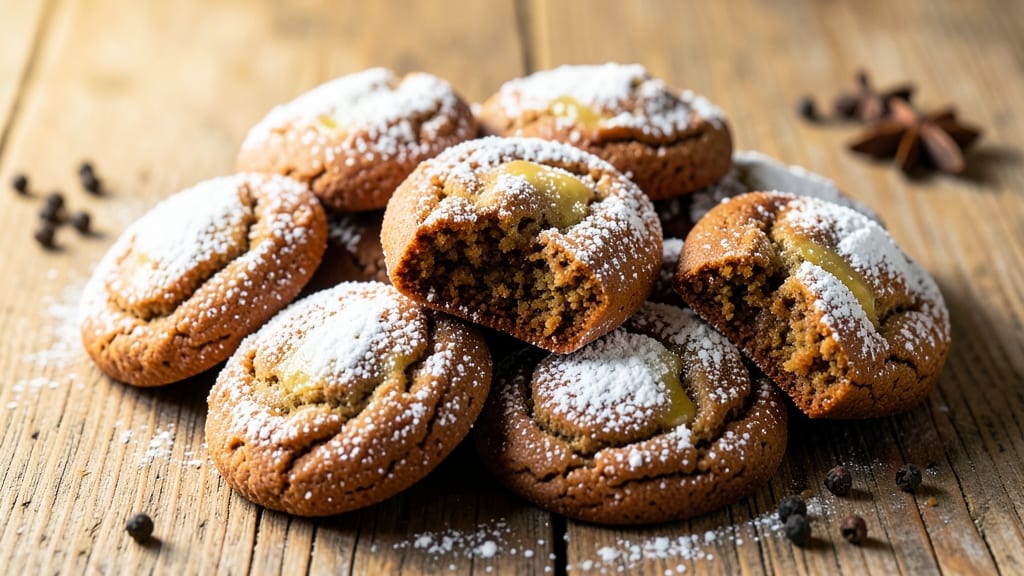
This gingerdoodle cookie recipe delivers the perfect balance of warm cinnamon, molasses depth, and tender-chewy texture that makes them irresistible. The signature swirl of spiced dough creates a visual treat as satisfying as the first bite—crisp edges that give way to a soft, pillowy center.
After years of testing, I've perfected the technique to ensure every cookie comes out with that signature crack and just the right level of spice.
The secret lies in the dough's resting time and precise baking temperature—350°F for 10-12 minutes—which guarantees a golden finish without burning.
You'll need just 10 ingredients, most of which you likely already have in your pantry, making this a foolproof recipe perfect for holiday baking or cozy weeknight treats. The molasses adds natural sweetness while the ginger and cinnamon create that signature warmth that defines these cookies.
What you'll end up with is a batch of soft-chewy cookies with a crisp exterior and a spiced swirl that makes them look as good as they taste.
The aroma alone will fill your kitchen with holiday cheer, and the texture—neither too soft nor too hard—is what makes these cookies universally loved. These are the kind of cookies that disappear faster than you can pull them from the oven.
Whether you're baking for a crowd or treating yourself to a small batch, this recipe scales beautifully while maintaining that perfect texture. For those with dietary needs, I've included variations that keep the magic alive without compromising flavor. Let's get baking!
Ingredients for gingerdoodle cookie
Ten pantry staples transform into spiced swirls of holiday magic—crisp edges, chewy centers, and that signature crack.
| Ingredient | Amount | Notes |
|---|---|---|
| Unsalted Butter 🧈 | 1 cup | Cold, cubed for cutting |
| Granulated Sugar 🍚 | 1 cup | White or light brown |
| Molasses 🍯 | ½ cup | Unsulphured for best flavor |
| Large Eggs 🥚 | 2 whole | Room temperature preferred |
| All-Purpose Flour 🌾 | 3 ½ cups | Spooning and leveling method |
| Baking Soda 🧂 | 1 tsp | Freshly opened |
| Ground Cinnamon 🌿 | 2 tbsp | Ceylon preferred for warmth |
| Ground Ginger 🌶️ | 1 ½ tbsp | Freshly ground if possible |
| Ground Cloves 🌿 | ½ tsp | Lightly toasted for depth |
| Diamond Crystal Kosher Salt 🧂 | ½ tsp | Fine grain preferred |
| Vanilla Extract 🍶 | 1 tsp | Pure, high-quality extract |
The molasses is where the soul of these cookies lives. Blackstrap gives the deepest flavor, but unsulphured works too—just avoid the overly sweetened varieties. Trader Joe's and Whole Foods carry the best quality. For the butter, Plugrá or Land O'Lakes unsalted are my go-tos, but any cold, cubed butter works if you're in a pinch. The flour? King Arthur or Bob's Red Mill are the gold standards—measure accurately using the spoon-and-level method. Pro tip: Toast your spices lightly in a dry pan before mixing to wake up their flavors—ginger and cloves especially benefit from this step.
No molasses? Substitute 1/4 cup honey plus 1/4 cup corn syrup—it won't be identical, but close enough for most. Running low on vanilla? Almond extract at half the amount works in a bind, though it has a distinct nutty note. The baking soda is non-negotiable for that signature rise, but if you're gluten-free, King Arthur 1-to-1 gluten-free flour keeps the texture intact. For the spice blend, Penzeys or McCormick ground spices are reliable, but if you've got whole spices, grind them fresh—the difference is night and day. And yes, you can make these with brown sugar if you prefer a caramel note, though I find the molasses keeps it perfectly balanced.
These cookies keep for 5 days in an airtight container at room temperature, though they'll lose that perfect chew after day 3. For longer storage, freeze the dough balls—up to 3 months—and bake straight from frozen, adding 1-2 minutes to the time. The aroma alone will have your house smelling like a spice market. Double the batch and freeze half; you'll thank me later. And if you're feeling fancy, dust with powdered sugar right after baking—just a pinch—for that bakery-fresh look.
Why You'll Love This Recipe
- No-Fuss Mixing: I swear by this dough—just cream butter and sugar, fold in molasses, then stir in dry ingredients. No weird ratios, no overworking the butter, just one bowl and you’re done. Honestly, the only measuring I do is eyeballing the molasses, and somehow it always works.
- Molasses Magic: That deep, caramel-like kick from molasses? It’s the secret weapon here. The cookies have this perfect balance—sweet but not cloying, with a warm spice whisper that makes them taste like a hug. (Yes, even on a Tuesday night.)
- Bulk-Friendly Batches: Make a double batch, freeze half, and thank me later. These cookies keep for weeks in an airtight container, and reheating them in the oven for 3 minutes brings them back to life. My go-to for holiday gifts—just wrap ‘em up, and boom, you’ve got a present that’s basically edible gold.
- Pantry Staple Power: Butter, sugar, flour, eggs—you’re already stocked. Molasses is the only thing you might need to grab, and it lasts forever. I’ll be real: I’ve made these with brown sugar in a pinch, and they’re still solid. Budget-friendly, reliable, and zero excuses not to bake.
Step-by-step instructions for gingerdoodle cookies
Here's how to transform these bold spices into chewy, swirled cookies with perfect texture every time.
Cream Butter and Sugar to Fluffy Perfection
In a stand mixer fitted with the paddle attachment, combine the 1 cup unsalted butter (cold and cubed) with the 1 cup granulated sugar. Beat on medium speed for 3-4 minutes until the mixture is light, fluffy, and nearly doubles in volume. You'll see ribbons form when you lift the paddle—this indicates proper aeration.
I like to scrape down the sides every 30 seconds to ensure even mixing. The butter should be completely incorporated with no visible lumps, and the color should lighten slightly from the sugar's dissolution. This creaming process is crucial—it creates the air pockets that give gingerdoodles their signature chewy texture.
Add Molasses, Eggs, and Spice Blend
Reduce the mixer speed to low and add the 0.5 cup molasses, mixing for 30 seconds until fully combined. The molasses will darken the mixture slightly, which is perfect for those deep amber swirls. Next, add the 2 whole large eggs one at a time, mixing just until each is fully incorporated.
In a separate bowl, whisk together the 3.5 cups all-purpose flour, 1 tsp baking soda, 2 tbsp ground cinnamon, 1.5 tbsp ground ginger, 0.5 tsp ground cloves, and 0.5 tsp diamond crystal kosher salt. Gradually add this dry mixture to the wet ingredients, mixing on low speed just until combined—you should still see small flour streaks. Finish by adding the 1 tsp vanilla extract and mixing for an additional 10 seconds.
Chill the Dough for Optimal Texture
Transfer the dough to a bowl and cover tightly with plastic wrap. Refrigerate for at least 2 hours, or up to 24 hours for even better flavor development. Chilling is non-negotiable—it firms up the butter, which prevents excessive spreading in the oven and ensures those beautiful swirls hold their shape.
While the dough chills, preheat your oven to 350°F and line two baking sheets with parchment paper. The longer you chill, the better the texture—this is where the magic happens. If you're short on time, at least 1 hour will help, but 24 hours yields the most tender, flavorful cookies.
Roll, Swirl, and Bake to Golden Perfection
Once chilled, divide the dough into 24 equal portions (about 2 tablespoons each) and roll each into a 1-inch ball. Place the balls on the prepared baking sheets, spacing them 2 inches apart. Using a fork, gently press down on each ball to flatten slightly, then swirl the tines to create the classic crisscross pattern.
Bake for 10-12 minutes until the edges are golden brown and the centers still look slightly soft. The cookies will continue to set as they cool, so don't overbake—they should pull away from the parchment paper easily when done. For that perfect chewy texture, remove them when the edges are just beginning to firm up.
Cool and Enjoy Warm Spice Swirls
Let the cookies cool on the baking sheets for 5 minutes before transferring to a wire rack to cool completely. The first few minutes out of the oven are when they're most tender and flavorful—serve them warm with a glass of milk or iced coffee for the ultimate experience.
These gingerdoodles should have a soft, chewy center with a slightly crisp edge, and those warm spices should sing with every bite. Store any leftovers in an airtight container at room temperature for up to 5 days, or freeze for up to 3 months—they reheat beautifully in a 350°F oven for 5 minutes to restore their chewy magic.
Pro Tips For Making Gingerdoodle Cookie
- Chill the Dough: I learned this the hard way—rolling dough straight out of the fridge leads to sad, flat cookies. Give it at least 30 minutes in the fridge before baking. The cold butter will hold its shape, and you’ll get those classic chewy, crackly edges instead of pancakes.
- Measure Molasses by Weight: Molasses is thick, sticky, and varies wildly by brand. Use a kitchen scale for accuracy—aim for 120 grams (about ⅓ cup) for a balanced spice kick. Spooning it straight from the bottle guarantees uneven cookies.
- Cream Butter and Sugar Slowly: Don’t rush the creaming step. Let the butter soften to room temp (but not greasy) and mix on low for 2 minutes before adding sugar. This prevents excess air, which can make your cookies spread too much when baking.
- Use a Light Touch with Flour: Sift the flour first, then fold it in gently with a spatula—overmixing develops gluten, and your cookies will turn out tough. Stop as soon as the dough comes together. (Yes, even if it looks dry.)
Make-ahead tips for this dish
Dough Prep Ahead
Make the dough up to 24 hours in advance for deeper flavor and easier handling. Wrap it tightly in plastic wrap and refrigerate—I use a Glad Press'n Seal container to keep air out. The extended chill time enhances the molasses flavor and firms the butter for perfect swirls.
When ready to bake, let the dough sit at room temperature for 15-20 minutes before rolling. This prevents cracking during the swirl step. 🧁
Frozen Dough Balls
Divide chilled dough into 1-inch balls and freeze them on a parchment-lined tray for 1 hour before transferring to a Ziploc freezer bag. Store for up to 3 months. Bake straight from frozen, adding 1-2 extra minutes at 350°F.
The cold dough creates a thicker cookie with intensified spice flavor. I like to bake these in batches—just pull out what you need and keep the rest frozen. ❄️
Baked Cookies Storage
Cool completely before storing in an airtight container with parchment paper between layers. They stay fresh for 5 days at room temperature, though texture softens after day 3. For longer storage, freeze baked cookies in a single layer on a tray, then transfer to a bag.
Reheat in a 350°F oven for 5 minutes to restore chewiness. The aroma alone makes your kitchen smell like holiday baking. 🍪
Freezer-Friendly Variations
Add chopped crystallized ginger or white chocolate chips to the dough before freezing. The ginger adds a bright, zesty contrast, while chocolate chips melt beautifully during baking. Portion these variations into separate freezer bags and label clearly. I recommend 1/4 cup additions per batch to maintain texture balance. 🌶️
Batch Baking Strategy
Double the recipe and freeze half the dough balls immediately. This saves time during holiday baking rushes. I bake one tray while the next chills—rotate trays halfway through for even baking.
Use a cookie scoop for uniform portions. The first batch always tastes best when warm, but frozen dough ensures you're never without fresh cookies. 📅
Reheating Leftovers
Microwave individual cookies for 10-15 seconds to restore warmth, but they'll lose some chewiness. For best results, reheat in a 350°F oven for 3-4 minutes on a baking sheet.
Add a splash of milk to the pan for extra moisture. The spices mellow slightly when reheated, so enjoy them fresh whenever possible. 🔥
Nutrition facts
Frequently asked questions
Why do gingersnap cookies sometimes turn out too hard?
Overbaking is the #1 culprit—gingersnap cookies are done when edges are golden but centers still look slightly soft (10-12 minutes at 350°F). Another common mistake is using too much flour or baking soda. Stick to the 3.5 cups flour and 1 tsp baking soda measurements, and don't overmix the dough. The molasses also needs time to develop flavor, so never skip the 2-hour chill.
Can I make these cookies without molasses?
Yes, but the flavor will be different. For the closest substitute, mix ¼ cup honey + ¼ cup corn syrup. This combo mimics molasses' depth, though it won't have the same caramel-like richness. If you're avoiding molasses for dietary reasons, try 1 tbsp maple syrup + ¼ cup brown sugar instead—it'll be sweeter but still delicious. The texture may be slightly less chewy, though.
How do I get the perfect swirl pattern?
Start with cold dough balls (1-inch diameter) and use a fork to press down gently before swirling. The key is to create a slight well in the center—this helps the swirl form cleanly. Chill the dough thoroughly (2+ hours) so it holds its shape. If the swirls flatten too much during baking, your oven runs hot—rotate trays halfway through baking for even heat distribution.
Are gingersnap cookies gluten-free?
Not traditionally, but you can adapt this recipe! Replace all-purpose flour with a 1:1 gluten-free baking flour like King Arthur's, and add ½ tsp xanthan gum if your blend doesn't include it. For texture, reduce the molasses to ¼ cup and add 1 tbsp extra butter. These will be slightly crumblier but still packed with spice. Test with 1 batch first—gluten-free dough behaves differently.
Can I add chocolate chips to these cookies?
Fold in ½ cup white chocolate chips or dark chocolate chunks when mixing the dough. For best results, use high-quality chocolate (like Ghirardelli) that melts smoothly. Add them in the final 10 seconds of mixing to avoid overworking the dough. The chocolate pairs beautifully with the warm spices—just don't overdo it, or the texture may become too dense.