
Desserts
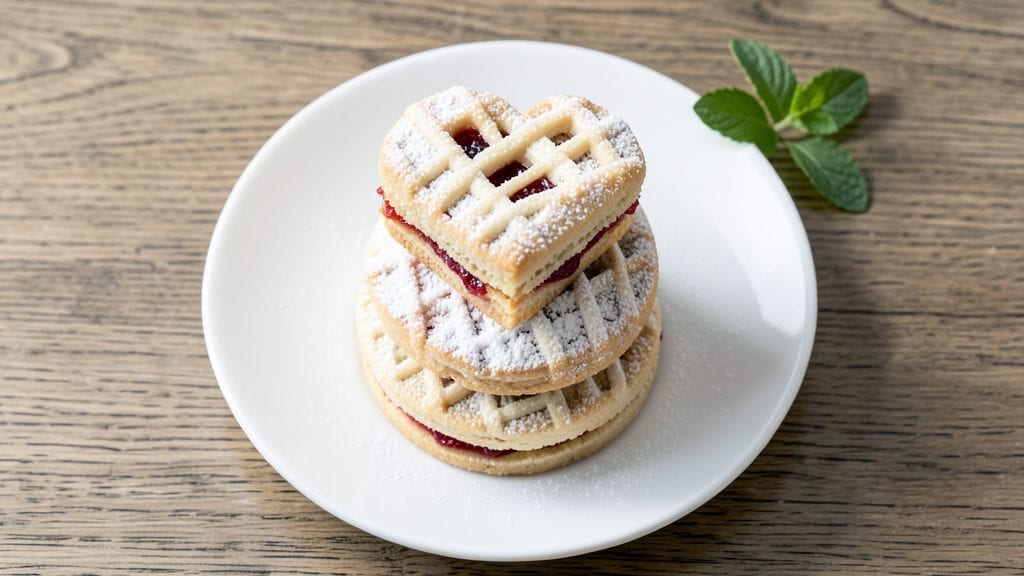
This Linzer heart cookie recipe delivers the perfect balance of buttery, crumbly cookie crust and sweet jam filling—an elegant dessert that feels both nostalgic and refined. The lattice pattern isn’t just decorative; it creates delicate, crisp edges while keeping the centers tender.
I’ve perfected the technique over years of baking, ensuring the jam stays vibrant and the crust maintains its signature snap.
The secret lies in precise timing: chilling the dough thoroughly before cutting shapes prevents spreading, while baking in stages ensures the lattice stays crisp. Traditional raspberry jam works beautifully, but modern variations like apricot or even spiced apple butter add exciting twists.
For professional results, use a high-quality jam—one with visible fruit pieces that won’t turn mushy during baking.
What you’ll end up with is a plate of cookies that looks like it belongs in a Viennese café, yet requires no special equipment beyond a rolling pin and a little patience.
The lattice cracks open just enough to reveal the jam inside, while the edges stay crisp enough to hold their shape. These cookies are ideal for holidays, gifts, or simply treating yourself to a touch of European elegance.
Ready to bake? Let’s break down the steps—from dough preparation to the final dusting of powdered sugar—that will make these Linzer hearts your new signature dessert.
Ingredients for linzer heart cookie
Buttery dough, vibrant jam, and delicate lattice—these 11 ingredients transform into cookies that taste like a Viennese café.
| Ingredient | Amount | Notes |
|---|---|---|
| All-Purpose Flour 🌾 | 2 ½ cups | Sifted for light texture |
| Unsalted Butter 🧈 | 1 cup | Cold, cubed for precise measuring |
| Granulated Sugar 🍚 | ¾ cup | Superfine preferred for smoothness |
| Powdered Sugar 🍚 | ½ cup | For final dusting |
| Large Eggs 🥚 | 1 whole | Room temperature |
| Vanilla Extract 🍯 | 1 tsp | Pure extract preferred |
| Salt 🧂 | ½ tsp | Fine sea salt |
| Raspberry Jam 🍓 | ¾ cup | High-quality, chunky style |
| Almond Extract 🌰 | ¼ tsp | Optional for depth |
| Heavy Cream 🥛 | 1 tbsp | For egg wash |
| Powdered Sugar 🍚 | 2 tbsp | Extra for dusting |
The butter and flour are your foundation—European-style butter like Plugrá or Kerrygold adds richness, while sifting the flour removes lumps for that signature crispness. King Arthur or Gold Medal flour works best for a tender yet sturdy crust. Chill the dough for at least 2 hours—this prevents spreading and ensures clean lattice cuts. For the jam, Marmalade or Bonne Maman brands deliver vibrant flavor without turning mushy during baking. If using homemade jam, strain out large seeds to avoid texture issues.
No raspberry jam? Apricot or spiced apple butter works beautifully—just reduce baking time by 1-2 minutes to prevent over-browning. Substitute almond extract with a pinch of cinnamon or cardamom for warmth. For a gluten-free option, swap flour for a 1:1 baking blend like Bob’s Red Mill. Heavy cream in the egg wash can be replaced with whole milk or water, though it won’t be as glossy. Pro tip: Use a sharp paring knife for the lattice—dull blades crush the dough, making cracks messy.
Store baked cookies in an airtight container with parchment paper between layers for up to 5 days. Reheat briefly in a 200°F oven for 3-5 minutes to restore crispness. Freeze unbaked dough shapes on a tray first, then transfer to a bag for 3 months. Jam-filled cookies are best enjoyed within 2 days of baking—freshness keeps the lattice crisp. Dust with powdered sugar right before serving to preserve that café-fresh look.
Why You'll Love This Recipe
- Butter-Packed Richness: The moment those cookies hit your tongue, you’ll taste why butter and sugar are a match made in heaven. That tender crumb from the all-purpose flour and eggs? It’s like biting into a cloud—but one with just enough structure to hold its heart shape.
- No-Fuss Assembly: Honestly, this recipe is one of those "I can’t believe it’s this easy" moments. Cream butter and sugar, fold in dry ingredients, chill the dough, and cut—no fancy techniques. Even if your cookie cutters are slightly wonky, the flavor still wins.
- Double-Duty Baking: Between us, I’ve used these for holiday gifts, teacher appreciation boxes, and even as a last-minute dessert when company drops by. The powdered sugar glaze? Instantly makes them look fancy, no matter the occasion.
- Leftovers? More Like Leftovers: Here’s what sold me—they stay fresh for days in an airtight container, and the glaze keeps them from drying out. I’ve sent these to work with my kids, packed them for road trips, and even frozen them for a quick treat later. Zero waste, all flavor.
Instructions for Linzer heart cookies
Follow these precise steps to create delicate Linzer hearts with a buttery lattice crust and jam-filled centers.
Prepare the Dough with Cold Butter
In a large mixing bowl, combine the 2.5 cups all-purpose flour, 0.75 cup granulated sugar, 0.5 tsp salt, and 1 tsp vanilla extract. Whisk until evenly distributed—this ensures consistent flavor throughout. Cut in the 1 cup cold, cubed unsalted butter using a pastry cutter or your fingers until the mixture resembles coarse crumbs with pea-sized butter pieces.
Add the 1 whole large egg and 1 tbsp heavy cream, mixing just until the dough comes together. Avoid overworking the dough—it should be soft but not sticky. Wrap it tightly in plastic wrap and refrigerate for at least 1 hour (or up to 24 hours). This chilling step prevents spreading during baking and enhances the flavor.
Roll and Cut the Cookie Dough
Preheat your oven to 350°F and line two baking sheets with parchment paper. On a lightly floured surface, roll out half of the chilled dough to ⅛-inch thickness. Use a 2-inch round cutter to cut out circles, rerolling scraps as needed. Place the circles on the prepared baking sheets, spacing them 1 inch apart. Repeat with the remaining dough.
For the lattice pattern, use a sharp knife to cut each circle into two halves, then cut each half diagonally into triangles. Arrange the triangles in a pinwheel pattern on a separate baking sheet, leaving space between each design. This creates the signature lattice crust that encases the jam filling.
Bake the Crusts Until Golden
Bake the plain dough circles for 12-14 minutes until the edges are light golden brown and the centers still appear slightly soft. Remove from the oven and let cool for 5 minutes before proceeding. For the lattice designs, bake for 10-12 minutes until the edges are just set and the centers remain slightly underbaked. Cool completely on a wire rack.
While the crusts cool, prepare the filling by warming the 0.75 cup raspberry jam in a small saucepan over low heat for 2-3 minutes, stirring until smooth. Remove from heat and stir in the 0.25 tsp almond extract (if using) for added depth of flavor. Let the filling cool to room temperature before assembling.
Assemble and Fill the Cookies
Place a ½-teaspoon of the cooled raspberry filling onto the flat side of one of the baked dough circles. Top with another circle, pressing gently to seal the edges. Use a small amount of the egg wash (1 egg yolk mixed with 1 tbsp water) to brush the top crust lightly, then sprinkle with 2 tbsp powdered sugar for a snowy finish. Repeat with the remaining dough and filling.
For the lattice designs, carefully place a ½-teaspoon of filling onto the center of each lattice pattern. Gently press a second lattice design on top, aligning the edges to create a sealed heart shape. Brush the tops with egg wash and dust with powdered sugar. Bake at 350°F for 8-10 minutes until the edges are golden and the filling is bubbling slightly through the lattice.
Cool and Serve for Perfect Texture
Allow the cookies to cool on the baking sheets for 10 minutes before transferring to a wire rack to cool completely. This resting period ensures the filling sets properly and the lattice crust firms up. Serve the Linzer hearts at room temperature for the best texture—crisp edges, tender centers, and a delicate balance of sweetness and tartness from the raspberry jam.
Store in an airtight container at room temperature for up to 5 days, or freeze for up to 3 months. For an extra touch, dust with additional powdered sugar just before serving to highlight their elegant appearance.
Pro Tips For Making Linzer Heart Cookie
- Chill the Dough Right: After mixing, split the dough into two discs and wrap them tightly in plastic. Pop them in the fridge for at least 2 hours—this isn’t just about convenience, it’s about preventing those cookies from spreading into sad, flat pancakes. I learned this the hard way when my first batch turned into a sugar cookie disaster.
- Use Room-Temp Butter: Take your unsalted butter out of the fridge 30-60 minutes before mixing—it should be soft but not greasy. Cold butter creates tough cookies, and nobody wants a linzer heart that cracks like a biscuit. (Yes, even if you’re impatient like me.)
- Press, Don’t Roll: For the jam filling, use a piping bag or a ziplock with the corner snipped off to create clean, precise lines. Press firmly but don’t overdo it—too much pressure will burst the cookie layers. My grandmother swore by this, and she was right: the filling stays where it belongs.
- Bake in Batches: Preheat your oven to 350°F (175°C) and bake one sheet at a time—crowding the pan steams the cookies, making them soggy. Space them 2 inches apart, and resist the urge to rotate the pan mid-bake. The edges will look set before the centers, so wait until they’re all golden.
Storing and reheating your linzer heart cookie
Room-Temp Storage
Keep your Linzer hearts fresh for up to 5 days by storing them in an airtight container between layers of parchment paper. This prevents sogginess and preserves that delicate lattice crispness.
I always use clear plastic containers with tight seals—they let me admire the cookies while keeping them protected. Place them in a cool, dark spot away from direct sunlight to maintain their texture. 💫
Freezing Unbaked Dough
For make-ahead convenience, roll and cut your dough shapes ahead of time, then freeze them on a parchment-lined tray for 30 minutes. Once firm, transfer to a freezer bag with parchment between layers.
They’ll keep for up to 3 months. When ready to bake, let them thaw in the fridge overnight—never at room temperature—to prevent spreading. This method saves time and ensures perfect results. ❄️
Reviving Crispness
If your cookies lose their crisp edges after storage, pop them in a 200°F oven for 3-5 minutes. This gentle heat reactivates the butter without overcooking the jam filling. For extra crunch, place them on a wire rack in the oven to allow air circulation.
I also recommend reheating lattice designs separately from filled cookies—the lattice needs just a quick warm-up, while the filling stays best untouched. 🔥
Jam Stability Tips
The jam filling is delicate—overheating during storage can turn it mushy. To extend shelf life, store filled cookies in the fridge for up to 3 days in an airtight container. For longer storage, freeze filled cookies (unfrosted) for 2 months.
Thaw in the fridge overnight, then warm in the oven for 2-3 minutes at 300°F to restore texture. Always use high-quality jam with minimal additives for best results. 🍓
Preventing Sogginess
Moisture is the enemy of crisp lattice edges. If storing for more than 2 days, place a silica gel packet in the container to absorb excess humidity. For extra protection, wrap individual cookies in parchment paper before storing.
I’ve found that cookies baked with less jam (about ¼ tsp per cookie) stay crisp longer—just enough to peek through the lattice without weighing it down. 💡
Serving Freshly Baked
For that café-fresh appeal, dust with powdered sugar right before serving. The sugar dissolves slightly from body heat, creating a delicate "snow" effect. Serve at room temperature—cold cookies dull the jam’s flavor and make the crust too firm.
Pair with chilled chamomile tea or sparkling wine for a sophisticated touch. The contrast of temperatures enhances the cookie’s delicate balance of sweet and tart. ✨
Nutrition facts
Frequently asked questions
Why do Linzer cookies have a lattice pattern?
The lattice isn't just decorative—it creates a delicate balance of texture. The cuts allow the jam to peek through while keeping the filling securely enclosed. The pattern also creates crisp edges that contrast beautifully with the tender center. Traditional Austrian bakers used this technique to showcase fruit preserves while maintaining structural integrity.
Can I make Linzer cookies without a heart shape?
While hearts are traditional, you can cut the dough into circles, squares, or even stars. The lattice technique works with any shape—just adjust your cutter size. For a modern twist, try using cookie cutters in holiday shapes like Christmas trees or pumpkins. The key is maintaining consistent dough thickness for even baking.
What's the best way to prevent the jam from leaking?
Underbake the crusts slightly (edges should be set but centers soft) before adding filling. Press the top crust firmly to seal the edges, and chill the assembled cookies for 30 minutes before baking. Using ¼ tsp jam per cookie instead of ½ tsp also reduces leakage while maintaining flavor. For extra security, brush the edges with egg wash before pressing the top crust on.
How do I store Linzer cookies to keep them crisp?
Store in an airtight container with parchment paper between layers to prevent moisture buildup. Keep them at room temperature for up to 5 days, or freeze unbaked dough shapes for 3 months. For reheating, place on a wire rack in a 200°F oven for 3-5 minutes—this restores crispness without affecting the filling. Avoid plastic containers that trap humidity.
Can I substitute the raspberry jam with something else?
Yes! Try apricot, plum, or spiced apple butter for variety. For savory options, use herbed goat cheese or fig jam. Reduce baking time by 1-2 minutes when using thicker fillings like cheese to prevent over-browning. Just ensure your substitute has a similar consistency to maintain the cookie's structure.