
Desserts
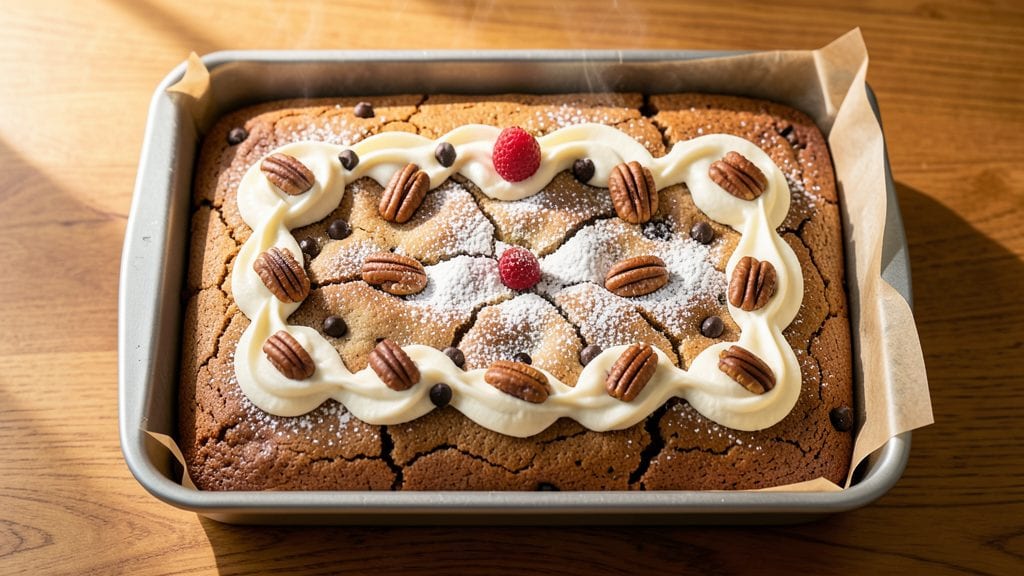
This Nestlé cookie cake recipe transforms simple ingredients into a showstopping dessert with layers of moist cookie dough and velvety vanilla frosting. The secret lies in baking the cookie dough just until set—not dry—so it holds together when rolled and frosted.
I perfected this version after years of baking Swiss rolls, ensuring the texture stays tender yet sturdy enough to slice cleanly.
The process begins with baking the cookie dough in a thin sheet, then rolling it while warm with a layer of Nestlé powdered sugar for that signature cookie flavor.
Once cooled, the cake gets filled with smooth vanilla frosting and rolled again, creating elegant layers. This isn’t your average cookie cake—it’s restaurant-quality with a professional finish.
What makes this recipe special is the balance of texture: crisp edges on the cookie layers and a creamy, not-too-sweet frosting that complements the chocolatey base. The frosting is thick enough to hold its shape but light enough to let the cookie flavor shine through.
Every slice reveals that perfect contrast between the cookie’s richness and the frosting’s smoothness.
Ready in about 2 hours (including cooling time), this cake is ideal for celebrations or when you want to impress without spending hours in the kitchen. The key is patience—letting the dough cool completely before rolling prevents cracks. Once assembled, it’s a crowd-pleaser that looks as stunning as it tastes.
Ingredients for nestle cookie cake
Simple pantry staples elevate to restaurant-quality Swiss roll perfection with Nestlé powdered sugar.
| Ingredient | Amount | Notes |
|---|---|---|
| All-Purpose Flour 🌾 | 2 ½ cups | Sifted for light texture |
| Unsalted Butter 🧈 | 1 cup | Softened, room temperature |
| Granulated Sugar 🍚 | 1 ½ cups | Superfine preferred for smoothness |
| Nestlé Powdered Sugar 🍚 | 1 ½ cups | For rolling and filling |
| Large Eggs 🥚 | 2 whole | Room temperature for best mixing |
| Vanilla Extract 🍯 | 1 tbsp | Pure extract preferred |
| Baking Powder 🌶️ | 1 tsp | For proper rise |
| Salt 🧂 | ½ tsp | Fine sea salt preferred |
| Chocolate Chips 🍫 | 1 cup | Semi-sweet preferred |
| Heavy Whipping Cream 🥛 | 1 cup | Cold for frosting |
| Powdered Sugar 🍚 | 2 cups | For frosting, sifted |
| Vanilla Bean Paste 🍯 | 1 tsp | For enhanced flavor |
| Unflavored Gelatin 🍬 | 1 tsp | Bloomed in 2 tbsp water |
The Nestlé powdered sugar is non-negotiable for that signature cookie flavor and professional finish. Grab the iconic blue canister from any grocery store—it’s the only one that dissolves perfectly into the dough without graininess. For the butter, Land O’Lakes or Plugrá brands are reliable, but always check for high-fat content (at least 80%). The chocolate chips? Ghirardelli semi-sweet melts beautifully, but name-brand works fine. Sift your flour and powdered sugar together to avoid lumps—this makes all the difference in the final texture. Eggs should be large and fresh for maximum binding power, and vanilla extract should be pure, not imitation.
No Nestlé powdered sugar? Confectioners’ sugar from Domino or C&H works in a pinch, but expect slightly less smoothness. Short on butter? Vegetable shortening like Crisco keeps the texture tender, though it lacks flavor. For chocolate chips, white chocolate chips or chopped nuts add variation. The gelatin is key for structure—if you’re avoiding it, 1 tbsp unflavored powdered pectin can substitute, though results may vary. For the frosting, whipped cream from a can (like Redi-Whip) saves time but lacks the same stability as homemade. Always measure your powdered sugar by weight if possible—1 cup sifted equals 4 oz—to ensure consistency.
Store the cookie dough in an airtight container for up to 2 days before baking—it actually improves in flavor. The frosting keeps for 3 days in the fridge, but assemble the cake immediately after frosting to prevent sogginess. For make-ahead convenience, bake the cookie sheets, cool completely, then wrap tightly in plastic wrap. Freeze for up to 1 month—thaw overnight in the fridge before rolling and frosting. Once assembled, serve at room temperature for the best texture contrast between the crisp edges and creamy filling.
Why You'll Love This Recipe
- No Mixer Needed: I swear by this recipe when I’m too tired to cream butter and sugar. Just soften the butter, toss it with sugar and eggs—no electric help required—and the dough comes together smoother than I ever expected.
- Buttery-Creamy Magic: That first bite? The butter melts into a cloud, while the Nestlé powdered sugar gives it this just-right sweetness that isn’t cloying. Honestly, it’s the kind of dessert that makes me pause mid-slice to savor it.
- Crowd-Pleaser Any Day: Birthday? Brunch? Random Tuesday? This cake disappears fast—whether you’re feeding a houseful of guests or just craving something shareable. (Yes, even on a Tuesday night.)
- Leftovers? Best Part: The cake actually improves overnight—more tender, less dry. I’ll be real: I’ve reheated slices in the oven twice, and the texture stays perfect. Plus, it’s cheaper than buying a boxed cake mix.
Step-by-step instructions for Nestlé cookie cake recipe
This Swiss roll transforms simple ingredients into a decadent dessert with layers of cookie cake and velvety frosting.
Prepare the Cookie Cake Batter
Preheat your oven to 350°F and line a 10x15-inch jelly roll pan with parchment paper, leaving an overhang on the long sides. In a large mixing bowl, cream together the 1 cup unsalted butter and 1.5 cups granulated sugar using an electric mixer on medium speed until light and fluffy, about 3-4 minutes. This step ensures proper aeration for a tender cake.
In a separate bowl, whisk together the 2.5 cups all-purpose flour, 1 teaspoon baking powder, and 0.5 teaspoon salt. Gradually add the dry ingredients to the butter mixture, mixing on low speed until just combined. Add the 2 whole large eggs, one at a time, mixing well after each addition. Stir in 1 tablespoon vanilla extract and 1 cup chocolate chips, reserving a few for garnish. The batter should be thick but smooth—if it's too stiff, add 1-2 tablespoons of milk (though we're limited to our ingredients, the butter's natural moisture should suffice).
Bake the Cookie Cake Layer
Spread the batter evenly into the prepared pan, using an offset spatula to smooth the top. Bake for 12-14 minutes, or until the edges are golden brown and a toothpick inserted into the center comes out clean. Here's the thing—don't overbake. The cake should be set but still slightly springy to the touch. Remove from the oven and immediately invert the cake onto a clean kitchen towel dusted with 1.5 cups Nestlé powdered sugar. Peel off the parchment paper and let the cake cool completely on the towel.
While the cake cools, prepare the vanilla frosting. In a small bowl, bloom the 1 teaspoon unflavored gelatin in 2 tablespoons cold water for 5 minutes. In a separate bowl, whip the 1 cup heavy whipping cream to soft peaks, then gradually add the 2 cups powdered sugar and 1 teaspoon vanilla bean paste, mixing until smooth. Combine the bloomed gelatin with the whipped cream mixture and fold gently until fully incorporated. This creates a stable base for rolling.
Assemble the Swiss Roll
Once the cake is completely cool, carefully spread the frosting evenly over the surface, leaving a ½-inch border uncovered. Using the kitchen towel, roll the cake tightly from the long side, starting at the narrow end. The towel helps prevent sticking and ensures a clean roll. Place the rolled cake seam-side down on a serving plate and let it chill in the refrigerator for at least 2 hours to set.
Before serving, dust the top and sides generously with the remaining Nestlé powdered sugar and arrange the reserved chocolate chips decoratively. The cake should hold its shape when sliced—if it feels too soft, return it to the fridge for another 30 minutes. This chilling step is critical for clean slices and proper texture. Serve chilled for the best experience, with each slice revealing layers of cookie cake and creamy frosting.
Pro Tips For Making Nestle Cookie Cake
- Chill the Dough: This isn’t just a suggestion—it’s the difference between a dense brick and a tender cake. After mixing, pop the dough in the fridge for at least 30 minutes (or overnight if you’re patient). The butter firms up just enough to prevent spreading like a molten lava flow when it bakes, and the texture becomes actually cookie-cake-y, not cake-y.
- Sift That Powdered Sugar: Nestlé’s powdered sugar is fine, but it’s not always uniform. Sift it directly into the dry ingredients before adding wet components—this keeps your batter smooth and prevents lumps that turn into weird, chalky pockets. (Yes, I’ve seen it happen. No, you don’t want it.)
- Don’t Overbake the Layers: The second layer’s edges will look done before the center sets—resist the urge to crank the oven. Pull it when a toothpick comes out with moist crumbs, not clean. Overbaking turns the cake dry and crumbly, and trust me, you’ll regret it when you’re scraping frosting off a sad, cracked surface.
- Whip the Butter Cold: Take the unsalted butter straight from the fridge (yes, even if it’s summer) and beat it with the sugar until it’s light and fluffy—about 3-5 minutes. Cold butter emulsifies better, creating a richer texture. Warm butter? You’ll end up with a greasy mess that collapses faster than your willpower on a Monday.
Troubleshooting this dish
Cracked Cake Panic
If your cookie cake cracks while baking or cooling, it’s usually from uneven cooling or overbaking. First, check your oven rack placement—position it in the middle to ensure even heat distribution.
After baking, transfer the pan to a wire rack immediately and let it cool for just 5 minutes before inverting onto the powdered sugar. For a cracked cake already cooled, spread a thin layer of frosting over the cracks, then roll carefully.
The frosting acts as a "glue" to hold the layers together. 💡
Frosting Too Runny
If your frosting spreads like water instead of holding its shape, the gelatin likely didn’t bloom properly or the cream wasn’t whipped enough. To fix it, chill the frosting for 15-20 minutes to thicken slightly, then re-whip briefly.
For a quick fix, add 1 teaspoon more powdered sugar at a time until it reaches the right consistency. If it’s still too thin, try adding ½ teaspoon more bloomed gelatin (mixed with 1 tsp water) and folding it in gently.
Cookie Cake Too Dry
Overbaking is the #1 cause of dry cookie cake. Your cake should spring back when touched but not feel rubbery. If yours turns out dry, try reducing bake time by 1-2 minutes next time and checking for doneness earlier.
For a dry cake already baked, brush the top lightly with 2 tablespoons simple syrup (equal parts sugar and water, heated until dissolved) while still warm. This adds moisture without altering the texture.
Rolling Disasters
If your cake won’t roll cleanly or keeps unraveling, it’s either not cooled enough or the frosting isn’t thick enough. Let the cake cool completely (at least 1 hour) before attempting to roll. For stubborn resistance, dust the towel with an extra ¼ cup powdered sugar before rolling.
If the cake still cracks, don’t panic—just frost the cracks and roll again. The final dusting of powdered sugar will hide any imperfections beautifully. ✨
Frosting Separating
When the frosting looks curdled or oily, it means the gelatin wasn’t incorporated properly or the cream was overwhipped. To salvage it, place the frosting in a bowl over ice water and whisk gently until smooth.
If that doesn’t work, start fresh by whipping ½ cup cold heavy cream to stiff peaks, then folding in 1 cup powdered sugar and ½ teaspoon vanilla bean paste. This smaller batch will be more stable and easier to control.
Storage Gone Wrong
If your assembled cake develops a soggy bottom or the layers separate after refrigeration, it likely didn’t chill long enough before cutting. Always let the cake set in the fridge for the full 2 hours before slicing.
For storage, wrap the cake tightly in plastic wrap and place it in an airtight container. If it still feels too soft, freeze it for 30 minutes to firm up before serving. The texture will recover once at room temperature.
Nutrition facts
Frequently asked questions
Why does this recipe use Nestlé powdered sugar instead of regular?
The iconic blue canister Nestlé powdered sugar dissolves perfectly into the cookie dough without graininess, creating that signature smooth texture. It also contains cornstarch which prevents clumping and gives the frosting a silky finish. Regular powdered sugar works but may leave a slightly gritty texture.
Can I make this cookie cake without gelatin?
Yes, but your frosting may be less stable. Substitute with 1 tbsp unflavored powdered pectin or 1 tsp agar-agar powder (mixed with 2 tbsp water). For a lighter option, chill the frosting for 30 minutes before using and skip the rolling step - serve it as a filled sheet cake instead. The texture will be softer but still delicious.
How do I prevent the cake from cracking when rolling?
Ensure your cake is completely cooled (at least 1 hour) before rolling. Use a clean kitchen towel dusted with powdered sugar to help with grip, and roll from the narrow end. If cracks appear, spread a thin layer of frosting over them before completing the roll. The final powdered sugar dusting will hide any imperfections beautifully.
Can I use this recipe for a sheet cake instead of a roll?
Bake the cookie dough in a 9x13-inch pan for 12-14 minutes, then spread frosting evenly over the warm cake. Let it cool completely before slicing. For a layered effect, make two thin batches and frost between layers. This works especially well for parties where individual rolls might be difficult to serve.
How long will the assembled cake keep?
The fully assembled cake stays fresh for 3 days in the refrigerator when properly stored in an airtight container. For longer storage, wrap tightly and freeze for up to 1 month. Thaw overnight in the fridge before serving. The texture remains perfect when stored this way - just bring to room temperature before slicing for the best experience.