
Desserts
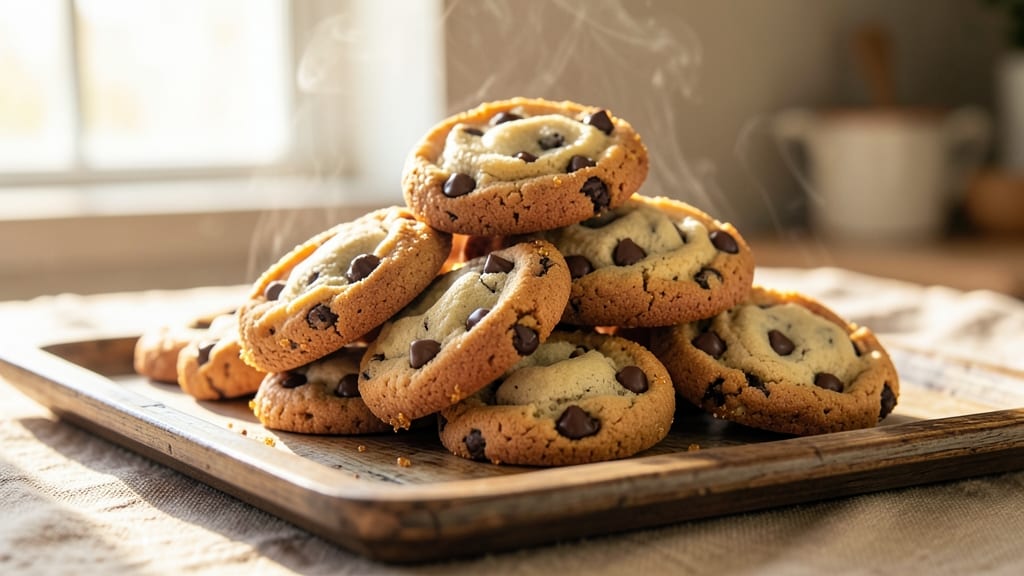
The Old Toll House cookie recipe delivers the perfect balance of chewy oat crust and molten chocolate centers that have made it a baking legend since 1938. This classic recipe stays true to the original while ensuring foolproof results every time—no burnt edges or dry centers in sight.
I've baked these countless times, and the secret lies in precise timing and quality ingredients you likely already have at home.
What sets these cookies apart is the oat crust—crisp around the edges yet tender inside—paired with chocolate hearts that stay gooey in the middle.
The recipe uses 1 cup of butter, 2 cups of sugar, and 2 cups of flour, along with a few simple pantry staples. The chocolate chips melt just enough to create those signature pockets of molten goodness, while the oats add a satisfying crunch.
Baking at 375°F for 9-11 minutes ensures a golden bottom and soft centers, and the cookies spread just enough to maintain their classic shape. The aroma alone—warm chocolate and toasted oats—will have your kitchen smelling like a bakery.
These are the cookies that bring back childhood memories while still feeling fresh and modern.
Once you try this version, you’ll understand why it’s been America’s favorite for decades. The recipe scales perfectly for holidays or everyday cravings, and a few simple variations—like adding nuts or white chocolate—keep it exciting. Let’s get baking!
Ingredients for old toll house cookie
Pantry staples meet nostalgic baking magic—just 11 ingredients for legendary cookies.
| Ingredient | Amount | Notes |
|---|---|---|
| Unsalted Butter 🧈 | 1 cup | Cold, cubed for even baking |
| Granulated Sugar 🍚 | 2 cups | White or light brown |
| Packed Brown Sugar 🍚 | ¼ cup | Light or dark preferred |
| Large Eggs 🥚 | 2 whole | Room temperature for blending |
| Vanilla Extract 🍯 | 2 tsp | Pure, not imitation |
| All-Purpose Flour 🌾 | 2 cups | Sifted for light texture |
| Baking Soda 🧪 | ½ tsp | Freshly measured |
| Salt 🧂 | ½ tsp | Diamond Crystal preferred |
| Old-Fashioned Rolled Oats 🌾 | 1 cup | Not quick oats |
| Semisweet Chocolate Chips 🍫 | 2 cups | Nestlé or Guittard preferred |
| Toasted Walnuts 🥜 | 1 cup | Chopped, optional |
The butter is non-negotiable here. European-style unsalted (like Plugrá or Bergère) gives the best flavor, but any good-quality unsalted works. Grab it from the deli counter if you can—it stays fresher longer. For the oats, Quaker Old-Fashioned is the gold standard, but any rolled oats will do. The chocolate chips? Nestlé or Guittard melt perfectly, but avoid anything with stabilizers. Pro tip: Toast the walnuts in a dry pan for 3-4 minutes—they’ll taste infinitely better.
No vanilla extract? Vanilla bean paste works perfectly, or scrape seeds from a vanilla bean if you’ve got one. Brown sugar substitute? White sugar plus 1 tsp molasses mimics the moisture. Short on chocolate chips? Chop a chocolate bar (70% cacao or higher) into small pieces. The baking soda and salt are critical—don’t swap for baking powder. And if you’re feeling fancy, add flaky sea salt on top after baking for a gourmet touch. The oats can be toasted lightly in the oven (350°F for 5-7 minutes) to deepen their flavor—worth the extra step.
Store dough in the fridge for up to 3 days (covered tightly) or freeze for 3 months in a sealed container. Baked cookies keep at room temperature for 5 days in an airtight tin, but honestly, they’ll disappear faster than that. For holidays, bake a double batch and freeze half—just thaw before serving. The walnuts stay crisp for 2 weeks in the fridge if stored properly. And if you’re making these for a crowd, double the recipe—just increase the butter to 2 cups and bake in batches.
Why You'll Love This Recipe
- No-Fuss Mixing: I swear by this recipe because it’s just butter, sugar, eggs, and vanilla—no fancy techniques. Cream the butter and sugars until light, crack in eggs one at a time, and you’re done. Even if I’m distracted (hello, laundry pile), these cookies still turn out.
- Melt-in-Your-Mouth Magic: That perfect balance of crisp edges and chewy centers? It’s all in the brown sugar and vanilla. The butter stays rich but not greasy, and the vanilla—oh, it’s there, but not overpowering. One bite and you’ll forget store-bought ever existed.
- Party in a Jar: Between us, these are my go-to for anything. Holiday gatherings? Check. Last-minute teacher gifts? Done. Even my picky college-aged nephew asks for seconds. Freeze half the batch, and you’ve got a backup plan for when life gets chaotic.
- Budget-Friendly Staples: I use this recipe weekly because it’s cheap—just pantry basics. A stick of butter, a cup of sugar, and eggs I already had. Plus, leftovers? They last forever in an airtight container. No sad, dried-out cookies here—just pure, buttery goodness waiting for your next craving.
Step-by-step instructions for Old Toll House cookies
Here's how to make the iconic oatmeal cookies with that signature molten chocolate center.
Cream the Butter and Sugars Together
In a stand mixer fitted with the paddle attachment, beat the 1 cup unsalted butter (cold, cubed) with the 2 cups granulated sugar and 0.25 cup packed brown sugar on medium speed for 3-4 minutes. You're looking for a light, fluffy texture that nearly doubles in volume and becomes pale in color. This creaming process incorporates air, which creates those signature crackly tops and helps the cookies spread just right.
Scrape down the sides of the bowl with a rubber spatula to ensure even mixing. The butter should be fully incorporated but still hold its shape in soft peaks. If it looks too soft, chill the mixture for 10 minutes before proceeding—this prevents over-spreading in the oven.
Add Eggs and Vanilla Extract
Add the 2 whole large eggs (room temperature) one at a time, mixing on low speed for 30 seconds after each addition until fully combined. Then, add the 2 teaspoons vanilla extract and mix for another 10 seconds. The mixture should be smooth but still thick enough to hold its shape when dropped.
Here's the thing—room temperature eggs blend more easily and create a smoother dough. If your eggs are straight from the fridge, let them sit in warm water for 5 minutes before using. The vanilla extract should be pure, not imitation, for that authentic Toll House flavor.
Combine Dry Ingredients and Fold in Oats
In a separate bowl, whisk together the 2 cups all-purpose flour, 0.5 teaspoon baking soda, and 0.5 teaspoon salt. Sift the flour mixture over the wet ingredients and mix on low speed for 30-45 seconds until just combined—you should still see a few flour streaks. Overmixing develops gluten, which can make the cookies tough.
Remove the bowl from the mixer and fold in the 1 cup old-fashioned rolled oats and 1 cup toasted walnuts (if using) using a silicone spatula. The oats add that classic chewy texture, while the walnuts provide a delightful crunch. Be gentle here—you don't want to break up the oats into fine crumbs.
Fold in Chocolate Chips
Using the same silicone spatula, gently fold in the 2 cups semisweet chocolate chips. Distribute them evenly throughout the dough, but don't overmix—you want pockets of melted chocolate in the center of each cookie. If the dough feels too sticky, chill it for 15-20 minutes before scooping.
This is where the magic happens—the chocolate chips will melt in the oven, creating those gooey centers we all love. If you're feeling fancy, you can press a few extra chocolate chips into the tops of the cookies before baking for a decorative touch.
Chill and Scoop the Dough
Cover the dough with plastic wrap and refrigerate for at least 30 minutes (or up to 24 hours). Chilling firms up the butter, which helps the cookies hold their shape and prevents excessive spreading. It also allows the flour to fully hydrate, ensuring a tender crumb.
Once chilled, preheat your oven to 375°F and line two baking sheets with parchment paper. Scoop the dough into 2-tablespoon portions (use a cookie scoop for even size) and place them 3 inches apart on the prepared sheets. Flatten each scoop slightly with your palm—this ensures even baking and a thicker cookie.
Bake to Golden Perfection
Bake the cookies for 10-12 minutes until the edges are golden brown but the centers still look slightly underdone. They'll continue cooking on the hot pan after you remove them from the oven. Let them cool on the baking sheet for 5 minutes before transferring to a wire rack.
Here's the key—don't overbake. The cookies should be soft in the center with a crispy exterior. If you pull them out too soon, they'll be cakey; if you leave them in too long, they'll dry out. Serve warm for the ultimate experience, with a glass of cold milk on the side.
Pro Tips For Making Old Toll House Cookie
- CREAM THE BUTTER SLOWLY: Stop dumping that butter in all at once—it’ll turn your dough into a greasy mess. Let the butter soften just until it’s pliable (not melted), then mix it in gradually with the sugars using a wooden spoon or your fingers until it’s light and fluffy. That’s the only way you’ll get the classic chewy texture, not a dense brick.
- USE COLD EGGS: I learned this the hard way—room-temperature eggs make the dough too soft, leading to flat, sad cookies. Keep those eggs in the fridge until you’re ready to mix them in, then let them sit out for no more than 10 minutes before cracking them. Cold eggs keep the dough firm enough to hold its shape while baking.
- MEASURE BROWN SUGAR RIGHT: Pack that brown sugar hard—don’t just scoop and hope. Use a spoon to press it into the cup until it’s level with the rim, then scrape off the excess. Too little packed brown sugar means your cookies won’t have that deep caramel flavor and chewy bite. (Yes, it’s annoying, but it’s worth it.)
- BAKE ONE PAN AT A TIME: I know, you’re excited—you want to get all the cookies in the oven at once. But resist. Crowding the pan leads to uneven baking, and the edges will burn before the centers set. Stick to one sheet at a time at 375°F (350°F if your oven runs hot), and rotate the pan halfway through for even golden-brown cookies. Trust me, it’s better than a batch of half-baked disasters.
Regional styles of this old toll house cookie
Original Toll House
The classic version from the 1930s originated in the Toll House Inn in Massachusetts, where Ruth Wakefield allegedly invented them by chopping a chocolate bar into chunks. These original cookies use 1 cup butter, 2 cups sugar, 2 cups flour, and 1 cup chocolate chips—no nuts.
The recipe was first published in the Betty Crocker Cookbook in 1938, making it America’s most iconic cookie. 🍪
Southern Style
In the South, these cookies often include peanut butter—either swirled into the dough or added as a filling between two cookie halves. I like using 1 cup creamy peanut butter mixed into the wet ingredients, plus ½ cup chopped roasted peanuts for texture.
The heat from baking caramelizes the peanut butter, creating a rich, nutty flavor. 🥜
New England Twist
Up north, they love adding cranberries for a tart contrast. Fold in ½ cup dried cranberries (chopped) with the chocolate chips, and sprinkle flaky sea salt on top after baking. The cranberries balance the sweetness, while the salt enhances the chocolate. This variation is perfect for holiday gatherings. 🍁
Midwest Molten Core
The Midwest version cranks up the chocolate by using 2½ cups chocolate chips (including ½ cup white chocolate) and adding ½ cup mini pretzels for a salty crunch.
The pretzels soften slightly but keep their shape, creating a delightful texture contrast. This is a crowd-pleaser at state fairs and bake sales. 🍫
West Coast Adaptation
Out west, they often swap the walnuts for toasted pecans and add 1 teaspoon cinnamon to the dry ingredients. The pecans add a buttery richness, while the cinnamon gives a warm, spiced note. This version pairs beautifully with a glass of chilled chai latte. 🌴
Modern Gourmet Upgrade
For a fancier take, I like adding espresso powder (1 teaspoon) to deepen the chocolate flavor and folding in dark chocolate chunks (70% cacao) alongside the chips.
Top with flaky salt and serve with vanilla bean ice cream for a dessert-worthy treat. This version feels restaurant-quality but still tastes homemade. ✨
Nutrition facts
Frequently asked questions
Why do these cookies need to chill before baking?
Chilling the dough for at least 30 minutes prevents excessive spreading and helps the cookies hold their classic shape. The cold butter firms up, creating a more controlled bake. Plus, it lets the flour fully hydrate for a tender crumb—skipping this step often results in flat, cakey cookies.
Can I make these cookies without nuts?
The original Toll House recipe didn't include nuts, so simply omit the 1 cup walnuts and use the full 2 cups chocolate chips. The oat crust and chocolate will still deliver that signature chewy-molten combo. For extra richness, add ½ cup white chocolate chips instead.
How do I fix cookies that spread too much?
If your cookies spread excessively, they likely baked too long or the butter wasn't chilled enough. Next time, bake for 9-10 minutes at 375°F and flatten the dough balls slightly before baking. For already-baked cookies, try reheating them in the oven for 1-2 minutes at 350°F—the residual heat helps them set more firmly.
What's the best way to store leftover cookies?
Keep cookies fresh in an airtight container at room temperature for up to 5 days. For longer storage, freeze them for 3 months—just thaw at room temperature for 10 minutes before serving. The chocolate centers stay gooey when reheated briefly in the microwave (10 seconds) or oven (3 minutes at 300°F).
Can I substitute brown sugar with white sugar?
Yes, but the texture will be slightly different. Replace the 0.25 cup brown sugar with 0.25 cup white sugar plus 1 teaspoon molasses to mimic the moisture. Brown sugar adds chewiness, while white sugar creates a crispier edge. For the best results, use half brown/half white sugar if you're short on brown.