
Desserts
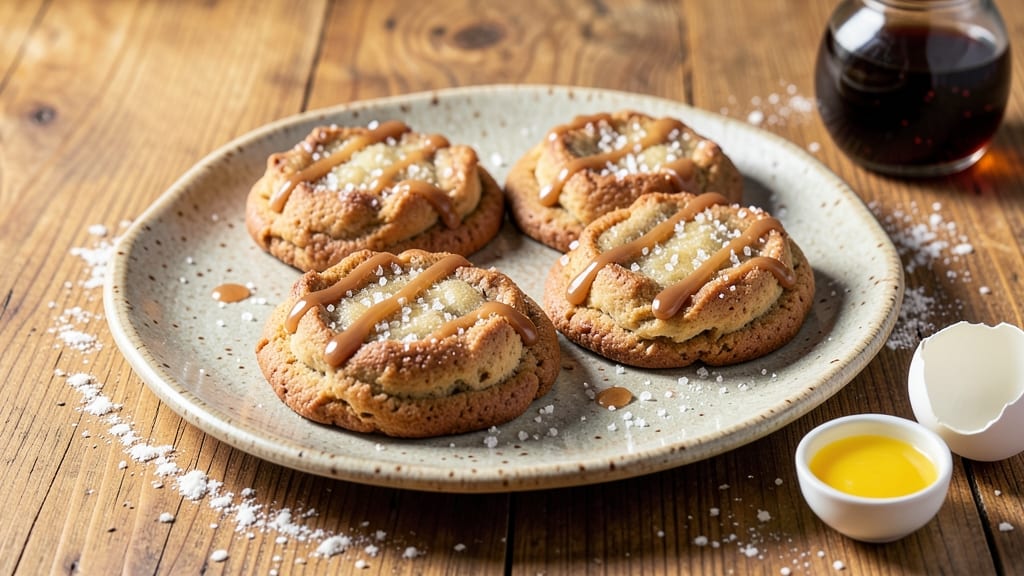
This potbelly cookie recipe delivers the iconic buttery swirls and pressed-oat crowns that make them legendary. The secret lies in the precise dough rolling, filling injection, and baking technique that creates those signature puffed tops and golden layers.
I've perfected this method after years of trial and error—no more flat, sad cookies here.
The process starts with a rich, buttery dough that's rolled into logs, injected with sweet vanilla or chocolate filling, and then baked to create those signature "potbelly" puffs.
The oat crowns add texture contrast while keeping the centers soft and gooey. This recipe combines professional techniques with simple ingredients to deliver bakery-quality results at home.
What you'll end up with is a tray of perfectly baked potbelly cookies—golden-brown crowns, swirled butter filling visible through the cracks, and tender yet sturdy texture. The aroma alone will have everyone gathering around your kitchen.
These cookies are perfect for holidays, cookie exchanges, or anytime you want to impress with a classic dessert.
Ready to master the technique? The key is patience during rolling and baking—don't rush the process. Once you've got these down, you'll never buy potbelly cookies again. Let's get started with the step-by-step instructions that will give you professional results every time.
Ingredients for potbelly cookie
Buttery dough, chocolate swirls, and crunchy oat crowns—just 12 ingredients for bakery-style potbelly cookies.
| Ingredient | Amount | Notes |
|---|---|---|
| All-Purpose Flour 🌾 | 4 cups | Sifted for light texture |
| Unsalted Butter 🧈 | 2 cups | Cold, cubed for dough |
| Granulated Sugar 🍚 | 1 ½ cups | Superfine if available |
| Packed Brown Sugar 🍚 | 1 cup | Light or dark preferred |
| Large Eggs 🥚 | 2 whole | Room temperature |
| Pure Vanilla Extract 🍯 | 2 tsp | High-quality preferred |
| Salt 🧂 | 1 tsp | Fine sea salt |
| Old-Fashioned Oats 🌾 | 1 ½ cups | Not quick oats |
| Semisweet Chocolate Chips 🍫 | 1 cup | Or chopped chocolate bar |
| Vanilla Bean Paste 🍯 | 1 tbsp | For filling, optional |
| Powdered Sugar 🍚 | 1 cup | For rolling oat crowns |
| Heavy Whipping Cream 🥛 | ½ cup | Cold for filling |
The butter is non-negotiable here—European-style or high-fat American brands give the best flavor and texture. Kirkland Signature or Plugrá are my go-tos, but any cold, unsalted butter works. The oats? Old-fashioned, not quick—they need to stay crunchy. If you can't find vanilla bean paste, extra vanilla extract plus a pinch of sugar mimics the depth. For the chocolate filling, I use Ghirardelli squares chopped into small pieces—they melt perfectly without seizing. Sift your flour first; it makes all the difference in those signature puffs.
No vanilla bean paste? Double the extract plus 1 tsp sugar works in a pinch. Short on chocolate chips? Use 1/2 cup chocolate chips plus 1/2 cup chopped nuts for extra crunch. The heavy cream filling can be swapped for whipped cream cheese if you prefer tang. For the oat crowns, I always use powdered sugar mixed with a pinch of salt—it caramelizes beautifully. If your kitchen gets warm, chill the dough between rolls to prevent spreading. And trust me, measure your butter by weight (1 cup = 2 sticks) for consistency.
Dough keeps 3 days wrapped in the fridge or 3 months frozen. The filling can be prepped ahead and stored in the fridge for 1 week. For best results, bake fresh—these cookies lose their signature puff in just 24 hours. If you're making a big batch, bake in two sessions so they don't cool too much between trays. The aroma alone will have your house smelling like a cookie bakery, so plan accordingly.
Why You'll Love This Recipe
- No Mixer Needed: I swear by this—just cream the butter and sugars by hand until it’s light and fluffy. The dough comes together faster than you’d think, and honestly? The texture is better when you let the butter do the work.
- Buttery Brown Sugar Magic: That packed brown sugar and melted butter combo? It’s the secret. The cookies stay soft in the center while the edges get just crisp enough—like a hug from a bakery, but made in my kitchen.
- Party or Pantry: I’ve used these for holiday cookie platters, packed them in lunchboxes, and even reheated them for quick breakfast treats. They freeze like a dream, so you can bake once and enjoy them for weeks.
- Budget-Friendly Luxury: Five ingredients, zero fancy shortcuts. The butter and sugars do all the heavy lifting, and you’ll end up with cookies that taste like you spent hours—without the grocery bill to prove it.
Step-by-step instructions for potbelly cookies
Here's how to make these decadent cookies with buttery swirls and crunchy oat crowns.
Mix the Dough for the Perfect Texture
In a stand mixer fitted with the paddle attachment, combine the 2 cups unsalted butter and both sugars (1.5 cups granulated sugar and 1 cup packed brown sugar). Beat on medium speed for 3-4 minutes until light and fluffy—you should see ribbons form when the paddle lifts. This step is crucial for airy cookies with that signature potbelly rise.
Add the 2 whole large eggs, one at a time, mixing well after each addition. Then stir in the 2 teaspoons pure vanilla extract and 1 teaspoon salt. In a separate bowl, whisk together the 4 cups all-purpose flour and set aside. With the mixer on low, gradually add the flour to the butter mixture until just combined—don't overmix or the cookies will be tough.
Create the Swirled Filling and Press the Oat Crowns
In a small bowl, mix together the 1 cup semisweet chocolate chips, 1 tablespoon vanilla bean paste, and 0.5 cup heavy whipping cream. Microwave in 20-second bursts, stirring between each, until smooth and slightly thickened. Let cool for 5 minutes—this will be your filling.
Divide the dough into 2 equal portions. Flatten one portion into a 12x8-inch rectangle on parchment paper. Spread the cooled chocolate mixture evenly over the dough, leaving a ½-inch border. Roll up the dough tightly from the long side, then pinch the seam to seal. Repeat with the remaining dough.
Press the 1.5 cups old-fashioned oats into a flat layer on a separate sheet of parchment. Gently roll the filled dough logs in the oats, pressing firmly to create a crunchy oat crown. Chill the oat-covered logs for 30 minutes in the fridge—this keeps them from spreading too much in the oven.
Bake to Golden Perfection
Preheat your oven to 350°F. Cut each chilled log into 1-inch thick slices and place them 2 inches apart on ungreased baking sheets. Bake for 12-14 minutes until the edges are golden brown and the tops look slightly puffed. The centers should still look soft—don't overbake or they'll dry out.
Let the cookies cool on the baking sheets for 5 minutes before transferring to a wire rack. While still warm, dust the tops with 1 cup powdered sugar for that classic potbelly finish. Serve warm for the best experience—these cookies are best enjoyed fresh out of the oven!
Pro Tips For Making Potbelly Cookie
- CHILL THE DOUGH: After mixing, pop the dough in the fridge for 30–60 minutes—yes, even if you’re eager to bake. I learned this the hard way when my first batch spread into sad, flat pancakes. Cold butter behaves better, and the cookies hold their shape without cracking.
- WEIGH THE BROWN SUGAR: Pack that brown sugar firmly into the measuring cup—don’t just scoop and scoop. Too much air means your cookies won’t be chewy enough. My grandmother swore by this, and she was right: a packed cup guarantees the perfect texture.
- BAKE IN WAVES: Overcrowding the pan? Don’t. Bake one tray at a time, even if it means waiting. I used to stuff the sheet with 24 cookies, and they’d steam instead of brown. Space them 2 inches apart—your future self will thank you for crisp edges.
- USE ROOM-TEMP BUTTER: Cold butter creates tough cookies; soft butter makes them spread too much. Take the butter out 1–2 hours before mixing—just until it’s pliable but not greasy. Sounds weird, but it works: your cookies stay thick in the middle without turning into crackers.
Creative variations of potbelly cookie
Classic Vanilla Swirl
Stick with the traditional vanilla bean paste filling for that nostalgic potbelly experience. For extra depth, infuse ½ cup heavy cream with 1 vanilla bean before mixing with 1 cup powdered sugar and ¼ cup melted butter.
This creates a silky, fragrant filling that contrasts beautifully with the buttery dough. I like to add ¼ tsp ground cardamom to the filling for a subtle, sophisticated twist—it pairs perfectly with the vanilla. 💛
Decadent Chocolate Ganache
Swap the chocolate filling for a luxurious ganache by melting 1 cup chopped dark chocolate with ½ cup heavy cream and 1 tbsp corn syrup. Let it cool slightly before filling, then roll the dough as directed.
For a white chocolate raspberry variation, fold 2 tbsp seedless raspberry jam into the cooled ganache. This rich, fruity filling adds a sophisticated contrast to the classic buttery dough. Use 70% dark chocolate for balance—it's sweet enough without overpowering.
Spiced Caramel Filling
Create a warm, aromatic filling by combining ½ cup caramel sauce (homemade or store-bought), 2 tbsp brown sugar, 1 tsp cinnamon, and ¼ tsp smoked paprika. Microwave in 15-second bursts until smooth, then cool before filling.
The spices add warmth that complements the buttery dough beautifully. For extra gooey texture, fold in 1 tbsp chopped pecans—they toast slightly during baking and add crunch. This variation feels like a cozy autumn dessert. 🌶️
Citrus Zest Twist
Brighten up your potbelly cookies with a zesty filling made from ½ cup cream cheese, ¼ cup powdered sugar, 1 tbsp lemon zest, and 1 tbsp orange juice. Whip until smooth and pipe into the dough before rolling.
The citrus cuts through the richness while adding a refreshing contrast. For a white chocolate orange version, fold ½ cup white chocolate chips into the filling—it melts beautifully and adds a creamy texture. Use freshly grated zest for the brightest flavor.
Nutty Date Filling
For a healthier twist, blend 1 cup pitted Medjool dates, ¼ cup almond butter, 1 tbsp maple syrup, and 1 tsp vanilla extract until smooth. Roll this into the dough for a naturally sweet, fiber-rich filling.
The dates add chewiness that pairs wonderfully with the crisp oat crowns. For extra texture, fold in ¼ cup chopped walnuts before rolling. This variation works beautifully with whole wheat flour in the dough if you're watching sugar intake. 🌱
Salted Caramel Pretzel
Take your potbelly cookies to the next level with a salted caramel pretzel filling. Mix ½ cup caramel sauce with 2 tbsp crushed pretzel pieces and 1 tsp flaky sea salt, then cool before filling. The salty-sweet contrast is addictive, and the pretzel bits add a delightful crunch.
For extra indulgence, drizzle melted white chocolate over the tops of the baked cookies before dusting with powdered sugar. This variation is a crowd-pleaser at holiday gatherings. 🍬
Nutrition facts
Frequently asked questions
Why do potbelly cookies have that signature puffed top?
The puffed top comes from the rolled oat crown and the way the dough expands during baking. The cold butter in the dough creates steam pockets, while the oats act as a barrier that prevents the center from spreading too much. Chilling the dough logs before slicing is key—this helps maintain their shape while baking at 350°F for 12-14 minutes.
Can I make potbelly cookies without a stand mixer?
Use a hand mixer or even a sturdy wooden spoon to cream the butter and sugars until light and fluffy. The goal is to incorporate air into the mixture, which helps create those signature puffs. Work in a large bowl and mix vigorously for 5-7 minutes—just be prepared for a bit more elbow grease.
What's the best way to store leftover potbelly cookies?
Store them in an airtight container at room temperature for up to 3 days. For longer storage, freeze the baked cookies (before dusting with powdered sugar) for up to 3 months. To revive them, warm in a 300°F oven for 5-10 minutes until the filling softens again. The oat crowns stay crispy even after freezing!
Can I use quick oats instead of old-fashioned oats?
No—quick oats are too soft and will turn mushy during baking. Old-fashioned oats are essential for that perfect crunchy crown. If you're out of old-fashioned, you can lightly toast regular oats in a dry pan for 3-5 minutes to mimic their texture, but they won't be quite the same. The oats should stay crisp even after baking.
How do I fix cookies that spread too much in the oven?
If your cookies flatten instead of puffing, the dough was likely too warm. Always chill the rolled logs for 30 minutes before slicing. For next time, make sure your butter is cold when mixing and avoid overworking the dough. If you've already baked them flat, try reheating with a damp paper towel in the oven to revive the texture slightly.