
Desserts
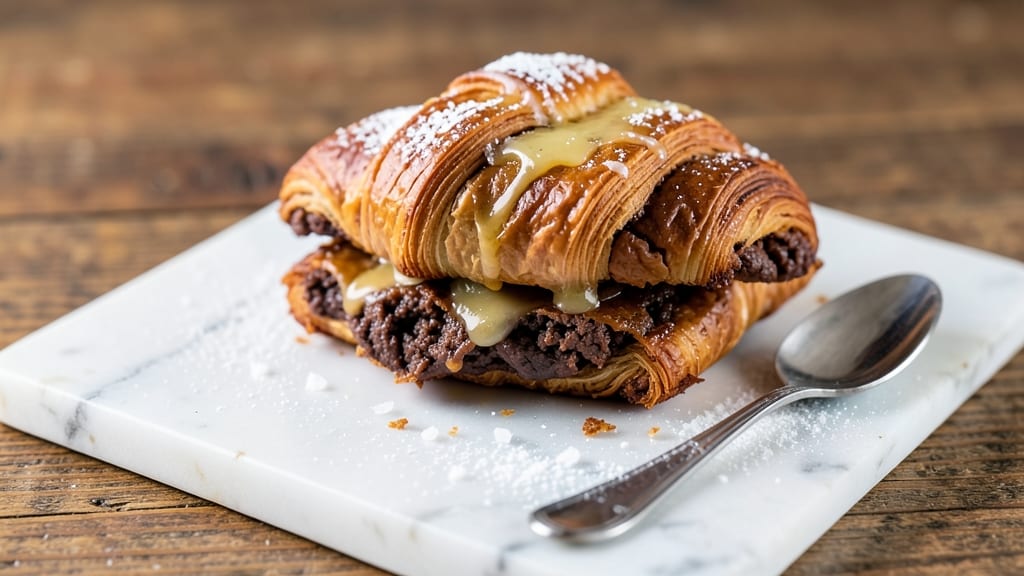
Creating a cookie croissant that combines flaky pastry perfection with cookie-like sweetness is a pastry chef's dream—and now, it's within your reach. This recipe marries the delicate layers of a croissant with the rich, buttery flavor of vanilla cookies, resulting in a dessert that looks as impressive as it tastes.
The key lies in the laminated dough technique, where layers of butter create that signature flakiness, while a vanilla-infused cookie filling adds depth and texture contrast.
The process begins with crafting a flaky croissant dough that requires patience and precision—folding, chilling, and rolling to develop those signature layers. Once shaped, the dough is filled with a vanilla cookie mixture before being baked to golden perfection.
The result is a dessert that delivers the best of both worlds: crisp edges, tender layers, and a harmonious blend of buttery pastry and cookie flavors. Every bite reveals the intricate balance between the two textures, making it a showstopper for any dessert table.
What makes this recipe truly special is the harmony of flavors and textures—the crispness of the cookie filling contrasts beautifully with the buttery, flaky layers of the croissant. The vanilla swirl adds a touch of elegance, while the caramelized edges create a satisfying crunch.
This dessert is ideal for special occasions, holiday gatherings, or simply treating yourself to something extraordinary. The technique might seem advanced, but with careful attention to detail, you'll achieve professional-quality results at home.
Once baked, these cookie croissants can be served warm, dusted with powdered sugar, or paired with a scoop of vanilla ice cream for an indulgent finish. The visual appeal alone—golden layers peeking through the crisp edges—will have everyone asking for the recipe.
Let’s get started on creating this decadent treat that blends the best of croissants and cookies into one unforgettable dessert.
Ingredients for cookie croissant
Mastering these ingredients transforms ordinary pastry into a showstopping cookie croissant with perfect flaky harmony.
| Ingredient | Amount | Notes |
|---|---|---|
| Unsalted Butter 🧈 | 2 cups | Cold, European-style preferred |
| All-Purpose Flour 🌾 | 4 cups | Bread flour for extra flakiness |
| Granulated Sugar 🍚 | ¼ cup | Superfine for smoother texture |
| Vanilla Bean Paste 🌿 | 1 tbsp | High-quality for authentic flavor |
| Large Eggs 🥚 | 2 whole | Room temperature for even mixing |
| Salt 🧂 | ½ tsp | Diamond Crystal kosher preferred |
| Vanilla Extract 🍯 | 1 tsp | Pure Madagascar bourbon |
| Brown Sugar 🍚 | ½ cup | Packed, light variety |
| Chopped Walnuts 🥜 | ½ cup | Toasted for enhanced flavor |
| Powdered Sugar 🍚 | ¼ cup | For dusting finished croissants |
| Heavy Cream 🥛 | ¼ cup | Cold for proper layering |
| Instant Yeast 🍞 | ¼ tsp | Fresh for optimal activation |
| Milk 🥛 | ¼ cup | Whole milk for richness |
The butter is non-negotiable—European-style with at least 82% fat content ensures those signature layers. Plugrá or President brands from specialty stores deliver the best results. Keep it cold throughout the process to maintain proper lamination. For the flour, King Arthur bread flour adds protein for superior elasticity, but all-purpose works in a pinch. The vanilla bean paste elevates the cookie filling beyond ordinary extracts, creating that restaurant-quality depth. Always use Madagascar bourbon vanilla extract for its complex flavor profile—imitation extracts lack the nuance.
No European butter? Plugrá or Land O'Lakes European-style from major grocery stores provide a close alternative. Substituting vanilla bean paste? Double the vanilla extract, but expect a less authentic flavor. For the walnuts, toasted pecans or hazelnuts work in a bind, though texture will differ. The powdered sugar can be swapped for superfine sugar sifted finely if unavailable. When measuring flour, use the spoon-and-level method—packing creates dense layers. The heavy cream must be cold to prevent premature melting of the butter layers during assembly.
Store cold butter and dough in the refrigerator between folds to maintain structural integrity. Never exceed 60°F in your workspace—use a chilled marble slab if needed. The cookie filling can be prepped up to 24 hours ahead and stored in the fridge. For optimal freshness, bake within 4 hours of final shaping. Once baked, these croissants stay fresh for 2 days at room temperature when wrapped airtight, or 5 days refrigerated. Freeze unbaked shaped croissants for up to 3 months—bake straight from frozen with 5 minutes extra time.
Why You'll Love This Recipe
- No-Fuss Layers: I swear, the dough comes together faster than you can say "butter at room temp." Just fold that cold butter into flour until it resembles crumbs—no food processor needed. Honestly, my first attempt was a little lumpy, but the flavor won me over.
- Vanilla Butter Bliss: That vanilla bean paste? It’s not just flavoring—it’s the star. The moment the baked croissants hit your plate with that caramelized sugar and swirl of vanilla, you’ll forget about store-bought pastries. (Yes, even on a Tuesday night.)
- Breakfast or Snack: These are my go-to for lazy mornings or after-school treats. Toast them lightly for a buttery breakfast, or serve warm with coffee—no judgment either way. Between us, I’ve even packed them for lunch when I’m really tired of sandwiches.
- Budget Baking Wins: You’re using pantry staples here: butter, flour, sugar, eggs. No fancy ingredients, just pure, rich flavor. Plus, they freeze like a dream—pull one out for a quick dessert or reheat a batch for a crowd. My wallet and freezer both thank me.
Step-by-step instructions for cookie croissant recipe
Mastering these layers requires precision and patience—here's how to achieve that signature flaky texture and vanilla harmony.
Prepare the Vanilla Bean Dough
In a stand mixer fitted with the dough hook attachment, combine the 2 cups unsalted butter (cold, cut into ½-inch cubes) with the 4 cups all-purpose flour, 0.25 cup granulated sugar, 0.5 tsp salt, and 0.25 tsp instant yeast. Mix on low speed until the butter is evenly distributed and resembles coarse crumbs. This ensures proper layering later.
Add the 2 whole large eggs, 0.25 cup milk, and 1 tsp vanilla extract, mixing on medium speed until the dough begins to come together. Scrape down the sides of the bowl and continue mixing for 3-4 minutes until the dough is smooth and elastic. The dough should pull away from the sides of the bowl and form a cohesive mass—this indicates proper gluten development for flaky layers.
Wrap the dough tightly in plastic wrap and refrigerate for 1 hour. Chilling firms up the butter, preventing it from melting during lamination and ensuring those signature flaky layers when baked. I like to flatten the dough slightly before wrapping to maintain a consistent shape for easier handling later.
Create the Cookie Filling
In a small bowl, combine the 0.5 cup brown sugar, 1 tbsp vanilla bean paste, and 0.5 cup chopped walnuts. Mix thoroughly until the walnuts are evenly coated. This filling will become the heart of each croissant, providing sweetness and texture contrast to the flaky pastry.
Divide the filling into 4 equal portions (about 2 tablespoons each) and shape each portion into a log about 3 inches long. Roll each log tightly in plastic wrap and refrigerate until ready to use. Keeping the filling cold prevents it from softening the butter in the dough during assembly.
Laminate the Dough for Maximum Flakiness
Remove the dough from the refrigerator and roll it out on a lightly floured surface into a 12x16-inch rectangle, about ¼-inch thick. Fold the dough into thirds like a letter, keeping the top third slightly longer than the bottom two. This creates a single fold that will build layers during the lamination process.
Wrap the folded dough tightly in plastic wrap and refrigerate for 30 minutes. After chilling, roll out the dough again to 12x16 inches, then fold it into thirds two more times, refrigerating for 30 minutes between each fold. This triple-fold lamination creates 24 layers of butter between the dough sheets—critical for that signature flakiness.
Assemble and Shape the Croissants
Roll out the laminated dough one final time to 12x16 inches, then cut it into 4 equal rectangles (about 6x8 inches each). Place one of the cold cookie filling logs diagonally across the center of each rectangle, about 2 inches from the bottom edge. This positioning ensures the filling stays centered as the croissant rises.
Gently fold the dough over the filling, then roll it tightly into a log starting from the filling end. Seal the seam by pinching the dough together, then shape the log into a U-shape and twist the ends to form the classic croissant shape. Place each shaped croissant on a parchment-lined baking sheet, seam-side down, and cover with a clean kitchen towel. Let them proof at room temperature for 1 hour or until they've risen about 50%.
Bake to Golden Perfection
Preheat your oven to 375°F. Brush the proofed croissants lightly with 0.25 cup heavy cream and sprinkle generously with 0.25 cup powdered sugar for a delicate sheen. Bake for 18-22 minutes until they're deep golden brown and the internal temperature reaches 190°F. The edges should be crisp, and the filling should be warm but not melted.
Transfer the croissants to a wire rack and let them cool for 10 minutes before serving. The contrast between the crisp, flaky exterior and the warm, gooey vanilla-walnut filling is what makes these cookie croissants truly special. For best results, serve them fresh from the oven while the layers are still at their peak texture.
Pro Tips For Making Cookie Croissant
- Chill the Dough Twice: Cookie croissants need a long rest—at least 24 hours, preferably 48—between the first and second chills. I learned this the hard way when mine spread like pancakes in the oven. Split the dough into logs, wrap tightly in plastic, and refrigerate overnight before rolling and cutting. The second chill (30 minutes after shaping) is non-negotiable for that crisp, flaky texture.
- Use Cold Butter, Not Soft: Unsalted butter straight from the fridge is your friend here. Cut it into small cubes and mix it into the dough just until combined—no need to cream it like shortbread. Cold butter creates those signature flaky layers. If your dough feels too sticky, chill it for 10 minutes before rolling. Trust me, your croissants will thank you.
- Weigh Your Flour Precisely: Cookie croissants are delicate—too much flour and they’ll be dense; too little and they’ll collapse. Use a kitchen scale for the all-purpose flour (typically 250g for a standard batch). Spoon the flour into the scale, don’t scoop it, and level it off. I used to eyeball it, and my first batch looked like hockey pucks.
- Roll the Logs Evenly: After shaping the dough into logs, roll them gently but firmly on a lightly floured surface to keep them uniform. Uneven logs = uneven baking. Press down lightly with your palm to flatten slightly, then twist the ends to seal. This ensures they puff up consistently in the oven—no lopsided surprises.
Serving suggestions for this dish
Warm Presentation
Serve these cookie croissants warm from the oven when the layers are at their peak flakiness. The contrast between the crisp, golden exterior and the warm, gooey vanilla-walnut filling is what makes them truly special.
I like to place them on a wooden serving board or marble slab to enhance their rustic elegance. A light dusting of powdered sugar right before serving adds a delicate finish that complements the caramelized edges. 🌟
Ice Cream Pairing
A scoop of vanilla bean ice cream is the perfect companion to these cookie croissants. The creamy, cold texture contrasts beautifully with the warm, flaky pastry. For an extra indulgent touch, drizzle warm caramel sauce over the ice cream and croissant.
I recommend using Häagen-Dazs vanilla bean or Ben & Jerry's vanilla for their rich, creamy texture. Serve immediately after baking for the best experience.
Coffee or Tea
Pair your cookie croissants with a strong brewed coffee or earl grey tea to balance the sweetness. The bitterness of coffee or the floral notes of tea cut through the buttery richness, creating a harmonious flavor profile.
For a festive touch, serve with a small espresso cup and a silver spoon for an elegant presentation. A cortado or latte works particularly well with the vanilla and walnut flavors. ☕
Garnish Ideas
Enhance the visual appeal with simple garnishes like toasted coconut flakes, crushed pistachios, or edible gold leaf. A sprinkle of flaky sea salt adds a sophisticated contrast to the sweetness.
For a festive holiday touch, add a few candied cranberries or dried rose petals. These garnishes not only look beautiful but also add subtle flavor layers that elevate the dessert. 💫
Make-Ahead Serving
If you're preparing ahead, store the baked cookie croissants in an airtight container at room temperature for up to 2 days. Reheat in a 350°F oven for 5-7 minutes to restore their crispness. For a make-ahead option, shape the croissants the night before and refrigerate them overnight.
Bake them fresh in the morning for a warm, just-out-of-the-oven experience. This works perfectly for brunch gatherings or holiday mornings. ⏰
Portioning for Guests
Cut each cookie croissant into 3-4 diagonal slices for easy sharing. Arrange them on a tiered serving tray with other pastries for a stunning dessert spread. For a casual setting, serve them on a chocolate-dipped plate or a parchment-lined tray with a side of whipped cream.
This makes them look like a bakery creation without the effort. 🍽️
Nutrition facts
Frequently asked questions
Why does my cookie croissant dough turn out dense instead of flaky?
The most common cause is butter melting during lamination. Keep your workspace and tools chilled (below 60°F) and use cold butter cubes (not softened). Also, avoid over-handling the dough—too much gluten development makes it tough. Each fold should be 30 minutes apart with proper chilling between layers.
Can I make these without a stand mixer?
Use a pastry cutter or your fingers to cut cold butter into flour until pea-sized crumbs form. Mix by hand until combined, then knead just until smooth. The dough will be slightly less elastic but still workable. For lamination, focus on keeping everything cold and folding precisely.
How do I prevent the cookie filling from oozing out during baking?
Keep the filling cold and use 2 tablespoons per croissant—too much filling creates pressure. Seal the dough seam tightly when shaping, and place croissants on a parchment-lined tray to prevent sticking. Bake at 375°F for 18-22 minutes—underdone croissants release filling more easily.
What’s the best way to store leftover cookie croissants?
Store in an airtight container at room temperature for 2 days or refrigerate for 5 days. To reheat, wrap in foil and warm at 350°F for 5-7 minutes until crisp again. For longer storage, freeze shaped (unbaked) croissants for 3 months—bake straight from frozen with 5 extra minutes.
Can I substitute the walnuts in the filling?
Yes! Try pecans, hazelnuts, or almonds for a similar texture. For a nut-free version, replace with chopped dried apricots or chocolate chips. Toast nuts first to enhance flavor—just 5 minutes in a dry pan until fragrant. Adjust sweetness if using fruit (reduce brown sugar slightly).