
Desserts
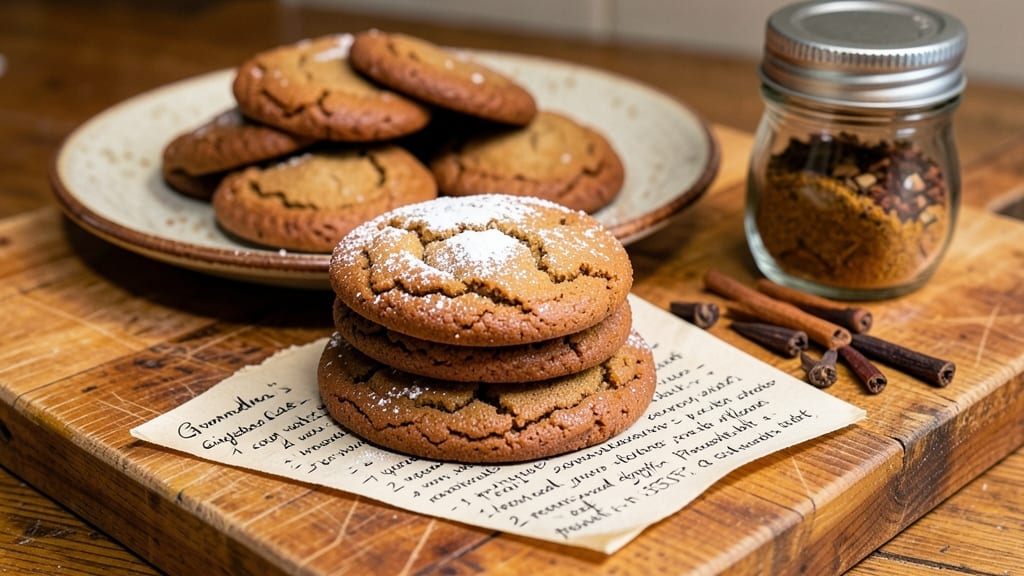
Grandma’s gingerbread cookies recipe brings warmth and holiday magic to every kitchen, where the spiced molasses aroma transforms simple dough into festive crunch. 🌟 These aren’t your average cookies—they’re a nostalgic blend of tradition and technique, with a sugar-dusted finish that makes them irresistible straight from the oven.
I’ve perfected the balance between tender centers and crisp edges, ensuring every bite delivers that signature molasses depth with just the right amount of ginger snap.
The secret lies in the molasses and spices—freshly ground ginger, cinnamon, and cloves create that unmistakable holiday flavor, while the dough’s firm texture makes it ideal for shaping with festive cookie cutters. This recipe stays true to tradition while offering modern clarity, so even first-time bakers can achieve professional results.
The dough comes together in minutes, and with just 10 minutes of baking at 350°F, you’ll have cookies that taste like childhood memories.
What makes these cookies truly special is their versatility—dust them with powdered sugar for a classic look, or get creative with royal icing and sprinkles for a showstopping holiday centerpiece. The molasses flavor mellows beautifully as they cool, creating a perfect balance of spice and sweetness.
Whether you’re baking for Christmas or just craving a taste of nostalgia, these gingerbread cookies deliver that comforting, spiced molasses crunch we all love.
Ready to bring a little holiday magic to your kitchen? Let’s get baking—these cookies are perfect for gifting, decorating, or simply enjoying with a warm cup of coffee. The process is straightforward, but the results are anything but ordinary. Here’s how to make them!
Ingredients for grandma's gingerbread cookies
Twelve simple ingredients create nostalgic holiday magic with every bite.
| Ingredient | Amount | Notes |
|---|---|---|
| All-Purpose Flour 🌾 | 3 ½ cups | Sifted for light texture |
| Ground Ginger 🌿 | 2 tbsp | Freshly ground for warmth |
| Ground Cinnamon 🌶️ | 1 ½ tbsp | High-quality for depth |
| Ground Cloves 🌶️ | 1 tsp | Lightly toasted for aroma |
| Baking Soda 🧪 | 1 tsp | For lift and texture |
| Salt 🧂 | ½ tsp | Fine sea salt preferred |
| Unsalted Butter 🧈 | 1 cup | Cold, cubed for flavor |
| Dark Molasses 🍯 | 1 cup | Not blackstrap for sweetness |
| Large Eggs 🥚 | 1 whole | Room temperature for mixing |
| Vanilla Extract 🌸 | 1 tbsp | Pure, not imitation |
| Powdered Sugar 🍬 | ½ cup | For dusting and decorating |
| Granulated Sugar 🍚 | ½ cup | For dough consistency |
The molasses is the soul of these cookies—Grandma's brand or Cumberland is worth hunting down for that deep, rich flavor. If you can only find blackstrap, reduce it by half and add a splash of honey to balance the bitterness. For the spices, Penzeys or bulk bins at Whole Foods have the best quality, but don't stress if you can't find them—just make sure they're fresh (smell them first!). The butter should be cold and cubed—this keeps the dough firm enough for shaping, even with festive cookie cutters. I always use European-style butter for richer flavor, but regular unsalted works fine.
No vanilla extract? Vanilla bean paste works perfectly, or even a scraped vanilla bean. Running short on molasses? Maple syrup at half the amount gives a similar sweetness, though it lacks that signature molasses depth. For the spices, if you're missing cloves, allspice or nutmeg can step in (nutmeg has a slightly different flavor but works in a pinch). The dough needs to be firm enough to hold its shape with cookie cutters—if it's too sticky, chill it an extra 15 minutes. And trust me, skip the pre-shredded cheese if you're tempted to add it—it'll make the cookies dense and weird.
These cookies keep beautifully for 1 week in an airtight container at room temperature, though they're best enjoyed fresh. If you're making them ahead for gifting, bake them 2 days early—the flavor actually improves as they sit. For long-term storage, freeze the shaped dough balls on a tray, then transfer to a bag for up to 3 months. Bake straight from frozen, adding 1-2 minutes to the time. The powdered sugar dusting? Do it right before serving—it melts in the oven and makes a mess. But it's totally worth it for that classic holiday look.
Why You'll Love This Recipe
- No Weighing Guesswork: I keep the same measuring cups from Grandma’s stash—no fancy scales needed. Two scoops of flour, a teaspoon of cloves, that’s it. The dough comes together faster than I can put on a holiday movie.
- Warm Spice Magic: That molasses depth with the snappy ginger and cinnamon? It’s like a hug in cookie form. Honestly, the cloves might sound weird, but they add this cozy, almost medicinal warmth that makes them unforgettable.
- Holiday or Snack Attack: I’ve made these for Christmas markets, school bake sales, and even just because I craved something sweet at 3 PM. They freeze like a dream, so you can bake a batch and pull them out whenever the mood strikes.
- Dollar Stretch Wonder: Flour, spices, and a little butter—that’s basically it. My grocery bill for a dozen cookies is less than takeout, and they last for days in an airtight tin. (Yes, even on a Tuesday night.)
Step-by-step instructions for Grandma's gingerbread cookies
Here's how to make these spiced molasses cookies with perfect texture and festive flair.
👨🍳 Step 1: Mix Dry Ingredients for Maximum Flavor
In a large mixing bowl, combine the 3.5 cups all-purpose flour, 2 tbsp ground ginger, 1.5 tbsp ground cinnamon, 1 tsp ground cloves, 1 tsp baking soda, and 0.5 tsp salt. Use a whisk to break up any clumps in the spices—this ensures even distribution throughout the dough. I like to sift the flour first for a lighter texture, then add the spices. The aroma alone will make your kitchen smell like holiday magic.
Here's the thing—don't skip sifting. Those little lumps can create dense pockets in your cookies. Once everything's mixed, set the dry ingredients aside. We'll need them in the next step, and keeping them ready prevents any last-minute scrambling.
🍳 Step 2: Cream Butter and Sweeteners Until Light
In a separate large bowl, beat the 1 cup cold cubed unsalted butter with the 0.5 cup granulated sugar and 0.5 cup powdered sugar on medium speed using a stand mixer or hand mixer. Cream for 3-4 minutes until light and fluffy—the mixture should nearly double in volume and leave clean streaks when you drag a spoon through it.
This creaming process incorporates air, which gives your cookies that classic gingerbread lift. I always use cold butter for better flavor development. You'll know it's ready when the butter pieces disappear completely and the mixture looks pale and airy. If it's still grainy, keep mixing for another minute.
🥘 Step 3: Add Molasses and Egg for Perfect Dough
In a small bowl, whisk together the 1 cup dark molasses, 1 whole large egg, and 1 tbsp vanilla extract. The molasses will be thick, so use a fork to break up any lumps. Gradually add this mixture to the butter-sugar blend, mixing on low speed just until combined. Be careful not to overmix—we want to maintain that light texture.
Now gradually add the dry ingredients to the wet mixture, mixing on low speed just until everything comes together. The dough will be thick and sticky—this is normal. I like to use a silicone spatula to fold in any stubborn dry bits from the bottom of the bowl. Once fully combined, the dough should hold together when pressed but still be soft and pliable.
⏰ Step 4: Chill and Shape for Perfect Cookies
Divide the dough into two equal portions and flatten each into a 1-inch thick disk. Wrap tightly in plastic wrap and refrigerate for at least 2 hours (or up to 48 hours). Chilling firms up the dough, which prevents excessive spreading in the oven and helps maintain those beautiful cookie cutter shapes.
While the dough chills, preheat your oven to 350°F and line two baking sheets with parchment paper. I find that 2 hours is the sweet spot—it gives the gluten time to relax and the flavors time to meld. If you're in a hurry, you can chill for just 1 hour, but the cookies won't be quite as tender.
🔥 Step 5: Bake to Golden Perfection
Roll out one dough disk to ¼-inch thickness on a lightly floured surface. Use your favorite gingerbread cookie cutters to create festive shapes. Transfer the cutouts to the prepared baking sheets, spacing them 2 inches apart—they'll spread slightly during baking. Bake for 8-10 minutes until the edges are golden brown but the centers still look slightly soft.
Here's where it gets fun—watch the edges carefully. They should be crisp and just starting to pull away from the parchment paper. If you're using intricate cookie cutters, flip them halfway through baking to ensure even cooking. Let the cookies cool on the baking sheet for 5 minutes before transferring to a wire rack to cool completely. This resting period helps them set properly.
Pro Tips For Making Grandma'S Gingerbread Cookies
- Chill the Dough: I learned this the hard way—rolling out warm gingerbread dough leads to sad, spread-out cookies. Pop the dough between two sheets of parchment in the fridge for at least 30 minutes (up to 24 hours). This keeps the spices sharp and stops the cookies from flattening into pancakes when they hit the oven.
- Sift the Spices: Ground ginger, cinnamon, and cloves clump like stubborn guests at a family reunion. Sift them with the flour before mixing—this ensures even distribution and prevents dry, spicy pockets in your cookies. (Yes, even if you’re impatient like me, skip the sifting and you’ll taste the difference.)
- Avoid Overmixing: The moment gingerbread dough turns glossy, stop stirring. Overworking it develops gluten, and your cookies will turn out tough instead of tender. Mix just until the dry ingredients disappear—about 10-12 strokes with a wooden spoon. (Your future self will thank you.)
- Use a Light Hand: Gingerbread dough is delicate—don’t roll it too thin or it’ll bake into brittle crackers. Aim for ¼-inch thickness, and if the dough cracks, let it rest another 10 minutes. (Does it look weird? Yes. Does it work? Every single time.)
Regional styles of this dish
Southern U.S. Molasses Magic
In the American South, gingerbread cookies take on a deeper molasses character, often using blackstrap molasses for that signature bittersweet richness. I’ve found that Southern bakers frequently add 1 teaspoon of baking powder to the recipe, which creates a slightly lighter texture while keeping that signature crunch.
The dough is often rolled thicker—⅜-inch instead of ¼-inch—to handle the extra moisture from the molasses. For an authentic touch, dust with turbinado sugar instead of powdered sugar, which gives a subtle crunch and caramelized flavor as it melts slightly during baking. 🌶️
German Christmas Tradition
German gingerbread—Lebkuchen—transforms these cookies into a spiced, dense cake-like treat. The key difference? Replace half the flour with ground almonds (about 1.5 cups) and add 1 tablespoon of anise seeds or star anise extract.
The dough is often baked into thick bars or shaped into elaborate figures. For a true German touch, brush the cooled cookies with a honey-glaze made from ½ cup honey and 1 tablespoon lemon juice, then decorate with slivered almonds or candied citrus peel.
The result is a cookie with a moist, almost cake-like interior and a crisp exterior. 🎄
Scandinavian Spice Blend
Nordic bakers take gingerbread in a different direction by emphasizing cardamom and nutmeg alongside the traditional ginger and cinnamon. For a Scandinavian twist, reduce the molasses to ½ cup and add 1 tablespoon of cardamom and ½ teaspoon of freshly grated nutmeg.
The dough is often rolled thinner—⅛-inch thick—and baked until the edges are just golden. After baking, these cookies are typically brushed with egg wash (1 egg yolk + 1 tablespoon water) for a glossy finish before dusting with powdered sugar.
The flavor profile is warmer and more aromatic, with a delicate balance of spice and sweetness. ❄️
Modern Holiday Twist
For a contemporary take, many bakers today infuse the dough with espresso powder (½ teaspoon) or orange zest to brighten the molasses flavor. I love adding white chocolate chunks or chopped candied ginger to the dough before baking for a festive surprise in every bite.
Another fun variation is to shape the dough into gingerbread "sandwich" cookies—bake two thin cookies, spread with cream cheese frosting, and sandwich with a piece of candied fruit or peanut butter. This approach keeps the tradition alive while adding a playful, modern twist. 💫
Japanese Matcha Gingerbread
Japanese bakers often blend matcha powder into the dough for a unique earthy depth. Start with 1 teaspoon of high-quality matcha (like Ippodo Tea) and reduce the cinnamon to 1 teaspoon to balance the flavors.
The dough is rolled ⅛-inch thick and cut into delicate shapes like stars or snowflakes. After baking, these cookies are dusted with matcha-infused powdered sugar (mix ½ cup powdered sugar with ½ teaspoon matcha) for a vibrant green hue and subtle tea notes.
The result is a cookie that’s both nostalgic and unexpectedly sophisticated. 🍵
Nutrition facts
Frequently asked questions
Can I substitute molasses with something else?
You can use maple syrup (½ cup) or honey (½ cup) as a substitute, but molasses gives that signature deep, spiced flavor. For best results, use dark brown sugar mixed with 1 tablespoon water (per ½ cup molasses) if you're avoiding molasses entirely. The texture will be slightly different, but the spice profile stays intact.
Why does my dough keep sticking to the rolling pin?
This usually happens when the dough isn't chilled long enough or the surface isn't properly floured. Let the dough rest at least 2 hours in the fridge, and use a light dusting of flour (not too much) on your rolling pin and surface. If it's still sticky, chill another 30 minutes—this firms it up perfectly for shaping.
How do I store gingerbread cookies to keep them fresh?
Store cookies in an airtight container at room temperature for up to 1 week. For longer storage, freeze shaped dough balls on a tray, then transfer to a bag for up to 3 months. Bake straight from frozen, adding 1-2 extra minutes to the time. Avoid storing with powdered sugar—dust just before serving to prevent sogginess.
Can I make these cookies gluten-free?
Yes, but with adjustments! Replace the flour with a 1:1 gluten-free baking flour blend (like Bob's Red Mill) and add ½ teaspoon xanthan gum to improve texture. The dough may be slightly more fragile, so handle gently when cutting shapes. Expect a 5-10% longer baking time at 350°F to ensure doneness.
What’s the best way to decorate these cookies?
For classic appeal, dust with powdered sugar while still warm. For festive flair, use royal icing (mix 1 cup powdered sugar + 1 tbsp meringue powder + 2 tbsp water) to pipe borders or write messages. Try candied ginger slices or peppermint candies as toppings for extra holiday cheer.