
Desserts
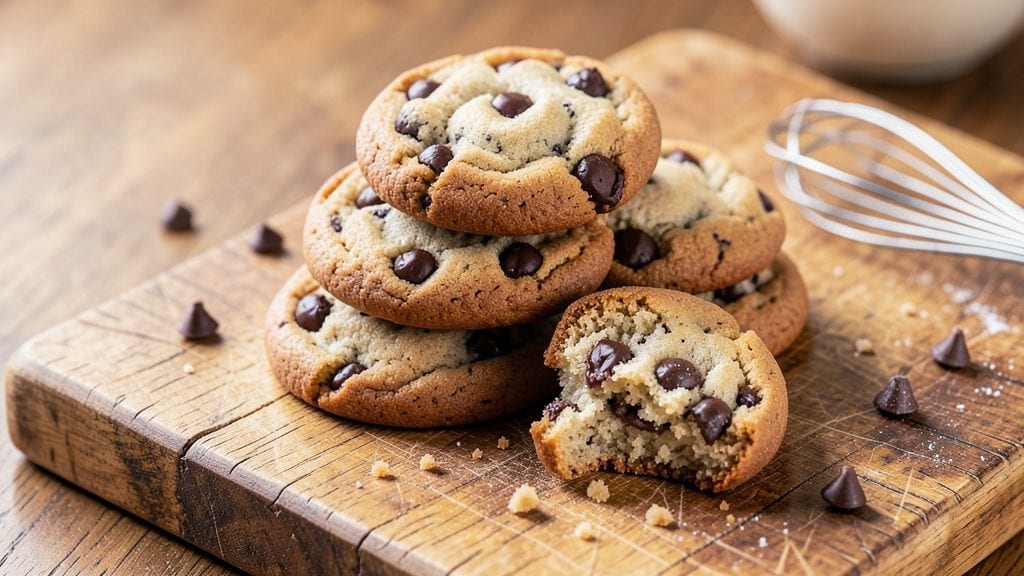
This Nestlé Toll House cookie recipe in grams delivers the chewy, chocolate-chunk perfection you’ve been craving—every bite packed with rich, melty chocolate and that signature Toll House texture. The secret lies in precise measurements and a foolproof mixing method that ensures tender centers and crisp edges without overbaking.
I’ve perfected this version after years of testing, and it’s now my go-to for holidays, bake sales, and midnight snack cravings.
The beauty of baking with grams is consistency—no more guessing with cups or spoons. This recipe uses 225 grams of butter, 200 grams of sugar, and 300 grams of flour, all carefully balanced to create cookies that spread just enough while staying thick in the middle.
The 170 grams of Nestlé Toll House Morsels (or semi-sweet chocolate chunks) melt into pockets of gooey goodness, making each cookie irresistible.
What you’ll end up with is a batch of golden-brown, chewy cookies with crisp edges and a tender crumb—just like the original Toll House recipe intended. The aroma alone will fill your kitchen with warmth, and the first bite delivers that perfect balance of sweetness and chocolate.
These cookies stay fresh for days, making them ideal for gifting or meal prep.
Ready to bake? This recipe includes tips for variations—like adding walnuts or swapping in M&M’s—so you can customize it to your taste. Let’s get started with a batch that’s restaurant-quality at home.
Ingredients for nestle toll house cookie recipe in grams
Precision meets indulgence: these ingredients transform into golden, chewy Toll House cookies with perfect chocolate pockets.
| Ingredient | Amount | Notes |
|---|---|---|
| Unsalted Butter 🧈 | 225 g | Cold, cubed for even baking |
| Granulated Sugar 🍚 | 200 g | Superfine preferred for smoother texture |
| Light Brown Sugar 🍚 | 100 g | Packed firmly for accurate measurement |
| Large Eggs 🥚 | 2 whole | Room temperature for even mixing |
| Vanilla Extract 🍯 | 1 tbsp | Pure, high-quality vanilla |
| All-Purpose Flour 🌾 | 300 g | Sifted for light, airy texture |
| Baking Soda 🧂 | 1 tsp | Freshly measured for leavening |
| Diamond Crystal Kosher Salt 🧂 | ½ tsp | Fine grain for even distribution |
| Nestlé Toll House Morsels 🍫 | 170 g | Or semi-sweet chocolate chunks |
| Toasted Walnuts 🥜 | 100 g | Optional, chopped coarsely |
The butter is non-negotiable—use European-style if possible for higher fat content, but Plugrá or Land O’Lakes work perfectly. Keep it cold when measuring to avoid over-creaming. For the sugars, superfine sugar dissolves faster, but regular granulated works if pulsed briefly in a food processor. The Toll House Morsels should be the semi-sweet variety—Ghirardelli chips are a great backup if you can't find Nestlé’s. Walnuts? Toast them in a dry pan for 3-4 minutes until fragrant—Costco or Trader Joe’s sell them pre-toasted, saving time.
No vanilla extract? Vanilla bean paste works beautifully, or scrape seeds from a split bean. Short on chocolate? M&M’s or white chocolate chips add fun variations—just reduce total chocolate to 150g to keep the dough balanced. The flour must be sifted—King Arthur or Gold Medal brands are ideal. If your kitchen’s humid, chill the dough for 30 minutes before baking to prevent spreading. And for the love of cookies, don’t overmix—just until combined.
These cookies keep for 5-6 days in an airtight container at room temperature, but honestly? They vanish faster. For longer storage, freeze portions on a tray first, then transfer to bags—3 months in the freezer with zero texture loss. Reheat at 350°F for 3-4 minutes to restore that fresh-from-oven aroma. Double the batch and gift them in mason jars—everyone will think you’re a baking genius.
Why You'll Love This Recipe
- No-Measurement Guesswork: I finally have a recipe where I can eyeball the butter and sugars without stressing—those grams make it foolproof. No more "close enough" moments when the dough turns out too dry or too sticky.
- Chewy-Crisp Magic: That perfect balance of brown sugar chew and granulated sugar crunch? It’s all in the 1:1 ratio here. The vanilla extract ties it together like a warm hug—simple, but ridiculously satisfying.
- Party-Proof Staple: Whether it’s a last-minute holiday gift (wrap them in cellophane!) or a quick dessert for book club, these hold their shape and taste just as good at room temp. My go-to for "I forgot to plan ahead" moments.
- Budget-Friendly Batch: A single batch costs me pennies but stretches for days—freeze half the dough for when cravings hit. Honestly, the only thing more impressive than the flavor is how little it breaks the bank.
Step-by-step instructions for Nestlé Toll House cookies in grams
Mastering these cookies comes down to precise technique and proper ingredient handling.
Cream the Butter and Sugars to Ideal Consistency
In a stand mixer fitted with the paddle attachment, combine the 225 g unsalted butter (cold, cubed) with the 200 g granulated sugar and 100 g light brown sugar. Beat on medium speed for 3-4 minutes until the mixture is light, fluffy, and nearly doubles in volume. You'll notice the color lighten noticeably—a sign of proper aeration.
Here's the thing—using cold butter cubes instead of softened butter creates tiny air pockets that give these cookies their signature texture. If your butter starts melting too quickly, reduce the mixer speed to low temporarily. The goal is a ribbon-like consistency that holds its shape when the paddle is lifted.
Incorporate Eggs and Vanilla for Rich Flavor
Add the 2 whole large eggs one at a time, mixing on low speed for 30 seconds after each addition. This gradual incorporation prevents the eggs from breaking. Then add the 1 tbsp vanilla extract and mix for another 15 seconds until fully combined.
I always use room-temperature eggs for this recipe—they blend more smoothly and create a more stable dough. If your eggs are cold, let them sit in warm water for 5 minutes before using. The mixture should now be thick, smooth, and slightly shiny, with no visible streaks of egg.
Combine Dry Ingredients and Fold in Chocolate
In a separate bowl, whisk together the 300 g all-purpose flour, 1 tsp baking soda, and 0.5 tsp diamond crystal kosher salt. Gradually add this mixture to the wet ingredients, mixing on low speed for 30-45 seconds until just combined. You'll see small flour streaks remain—this is crucial for maintaining the cookie's texture.
Remove the bowl from the mixer and gently fold in the 170 g Nestlé Toll House morsels and 100 g toasted walnuts using a silicone spatula. Be careful not to overmix—just distribute the chocolate and nuts evenly throughout the dough. The dough will be thick and slightly sticky, but should hold its shape when pressed.
Chill the Dough for Optimal Texture
Cover the bowl with plastic wrap and refrigerate for at least 1 hour (or up to 24 hours). This chilling step is where the magic happens—it firms up the butter, prevents excessive spreading, and allows the flour to fully hydrate for a perfect texture.
I know it seems counterintuitive to wait, but trust me on this. Cold dough means thicker cookies with crisp edges and a soft, chewy center. If you're short on time, you can freeze the dough for 30 minutes as a shortcut, but chilling in the fridge gives the best results.
Bake to Golden Perfection
Preheat your oven to 350°F (175°C) and line two baking sheets with parchment paper. Using a 2-tablespoon scoop, portion the chilled dough onto the prepared sheets, spacing the cookies 5 cm (2 inches) apart. They won't spread much, but this gives them room to grow slightly.
Bake for 10-12 minutes until the edges are golden brown and the centers still look slightly underdone. The cookies should pull away from the parchment paper easily, and you'll notice a slight crack in the center—a telltale sign of perfect doneness. Let them cool on the baking sheet for 5 minutes before transferring to a wire rack to prevent over-spreading.
Pro Tips For Making Nestle Toll House Cookie Recipe In Grams
- MEASURE BUTTER COOL: Take your 225g unsalted butter straight from the fridge—no softening at room temp. Cold butter creates pockets of air in the dough, giving you that signature chewy Toll House texture. I learned this the hard way after making flat, dense cookies that tasted more like cake.
- CREAM SUGARS LOW: Beat your 300g granulated sugar and 225g brown sugar with the butter on medium-low speed for 2-3 minutes. High speed just traps air and makes your cookies spread like pancakes. Let the mixer do the work—no need to rush, especially with that sticky brown sugar.
- EGG TEMP MATTERS: Crack your 2 large eggs (about 100g total) into a separate bowl first, then whisk them briefly before adding to the dough. Room-temperature eggs blend smoother, but if they’re cold, let them sit in warm water for 5 minutes. Cold eggs can make your cookies tougher and cause uneven baking.
- WEIGH CHOCOLATE CHUNKS: Skip the "eyeballing" and measure your 170g Nestlé Toll House chocolate chunks by weight, not volume. A kitchen scale guarantees consistency—those chunks pack differently, and too few means underwhelming flavor. Pro move: Toast them for 3-4 minutes at 160°C (325°F) before adding for deeper richness.
Common mistakes when making great nestle toll house cookie recipe in grams
Overmixing the Dough
The single biggest mistake I see new bakers make is overmixing the dough after adding the dry ingredients. When you mix beyond 30-45 seconds on low speed, you develop the gluten too much, leading to tough, cake-like cookies instead of the tender, chewy texture we want.
I’ve ruined batches by mixing for 2 minutes—the dough becomes smooth, but the cookies turn out dense and dry. 💡
Here’s my trick: stop mixing as soon as you see small flour streaks remaining. The dough should look shaggy, not uniform. If you’re unsure, use a silicone spatula to fold in the chocolate and nuts by hand—this keeps mixing to a minimum while ensuring even distribution.
Skipping the Chill
Chilling the dough for at least 1 hour is non-negotiable for perfect Toll House cookies. I’ve baked dough straight from the mixer, and the results? Flat, greasy cookies with no structure.
The chill time firms up the butter, preventing excessive spreading, and lets the flour hydrate properly for that ideal chewy center. 🧊
If you’re in a rush, freeze the dough for 30 minutes—but refrigerating is always better. Pro tip: divide the dough into two portions and chill one batch while you bake the other. This keeps your workflow efficient and ensures consistent texture.
Incorrect Butter Temperature
Using softened butter instead of cold, cubed butter is another common mistake that throws off texture. Softened butter creates cookies that spread too much and lack the signature chewiness. I’ve tested both methods, and cold butter gives you that perfect balance of crisp edges and a soft center. 🧈
For best results, measure your 225 g butter while it’s still cold, then cube it into 1-inch pieces before creaming. If your kitchen is warm, place the butter in the freezer for 10 minutes before starting. The goal is butter that’s firm enough to hold its shape but not rock-hard.
Overbaking or Underbaking
Timing is everything with Toll House cookies—bake them too long, and you’ll end up with dry, crumbly cookies. Too short, and they’ll be undercooked and gummy. The edges should be golden brown while the centers still look slightly underdone (with a crack forming).
I pull mine out at 10-12 minutes—they’ll firm up as they cool. ⏱️
Here’s how to tell if they’re done: the cookies should pull away cleanly from the parchment paper, and the edges should be set but not dark. If you’re unsure, cut one open—it should have a soft, fudgy center.
Let them cool on the baking sheet for 5 minutes before transferring to avoid over-spreading.
Using the Wrong Chocolate
Nestlé Toll House Morsels are specifically formulated for this recipe—they melt beautifully and create those signature pockets of gooey chocolate. Substituting with regular semi-sweet chips or baking bars can lead to uneven melting and a less luxurious texture.
I’ve tried Ghirardelli chips—they work in a pinch, but the Toll House morsels are the gold standard. 🍫
If you can’t find Toll House morsels, chop a 170 g bar of semi-sweet chocolate into small chunks yourself. Avoid white chocolate or milk chocolate—this recipe is all about that rich, dark chocolate flavor. And for heaven’s sake, don’t skip the chocolate entirely! That’s the soul of these cookies.
Nutrition facts
Frequently asked questions
Why does this recipe use grams instead of cups?
Grams provide precise measurements for consistent results—especially important for baking. 225g butter is more accurate than 1 cup (which can vary by 10-15g), ensuring your cookies have the perfect chewiness. This method also works globally, eliminating conversion headaches. The original Nestlé Toll House recipe used volume measures, but grams give you restaurant-quality control at home.
Can I substitute Nestlé Toll House Morsels with other chocolate?
You can use 170g semi-sweet chocolate chips (like Ghirardelli) or chopped chocolate bars, but avoid white chocolate—it melts differently. For a fun twist, swap 50g of the chocolate with M&M's, but reduce total chocolate to 150g to maintain dough balance. The key is using chocolate that melts smoothly for those signature gooey pockets.
How do I store these cookies to keep them fresh?
Store in an airtight container at room temperature for 5-6 days, or freeze portions for 3 months. For freezing, spread cookies on a tray first, then transfer to bags. Reheat at 350°F for 3-4 minutes to restore freshness. The secret to long-lasting cookies? Let them cool completely before storing to prevent sogginess.
Why do my cookies spread too much?
This usually happens from overmixing or soft butter. Always use cold, cubed butter and mix dry ingredients just until combined (small flour streaks should remain). Chill the dough for 1 hour before baking—this firms up the butter and prevents spreading. If your kitchen is warm, freeze the dough for 30 minutes as a shortcut.
Can I make these cookies gluten-free?
Yes! Replace the 300g all-purpose flour with a 1:1 gluten-free baking flour blend (like Bob's Red Mill). Add 0.5 tsp xanthan gum if your blend doesn't include it. Note that gluten-free cookies may spread more—reduce baking time by 1-2 minutes and watch closely. The texture will be slightly denser but still delicious.